


INTRODUCTION
There is a strange grey desert five minutes' drive from the small town of Sokndal. Every grain of sand in this place is man-made through mineral extraction, then moved and dumped in the middle of the wilderness. The sand suffocates all life and lies here as a monument to human ability and industrial ingenuity. From one perspective it is a dark and toxic scar on the surface of nature, but from another it is a place of cultural heritage, with a wealth of inspiration and its own unique ecosystem. It is from this place that we as artists and curators at Velferden conceived the WASTE / DEPOSIT program.
Velferden is an arena for artistic expression rooted in the site-specific context of the historic mine Titania AS in Sokndal. Since its founding in 2008, Velferden has served as a meeting point between contemporary art and the unique character of Sokndal as a place. Over time, the scope of Velferden has expanded to include interdisciplinary dialogue across art, culture, science, society, and industry.
In 2023, we launched the interdisciplinary research program WASTE / DEPOSIT , focusing on the monumental waste dumps left by local mining companies. The program arose from a desire to give our society a deeper understanding of the environmental situation in Sokndal and similar places. At first glance, the massive dunes create a surreal, almost seductive landscape, a desert that appears where it should not exist. But these dunes are only a small part of a global problem, a problem full of complexity and questions waiting to be explored.
As we began to investigate, fundamental questions arose: Who bears ultimate responsibility for this waste?
As we began to investigate, fundamental questions arose: Who bears ultimate responsibility for this waste? Why do we as a society allow companies to deposit waste on such a massive scale in natural environments? How do the rapid and violent changes to the landscapes affect our relationships to nature? And, crucially for us as artists, what role can creative practice play in such a context?
Approaching these challenges from an artistic and cross disciplinary dialogue allowed us to engage with the place and its problems in a nuanced way. While acknowledging the scale of the issues, we aimed to move beyond polarized narratives of industry versus environment, instead mapping the complexities, contradictions, and potentials inherent in the situation.
Like a deposit in a bank, waste has potential future value. Inspired by the idea that “waste is a design flaw,” we embarked on a three-year journey of fieldwork, meetings, scientific investigations, workshops, experiments, and artistic production. Like all Velferden -activities are WASTE / DEPOSIT open and looking for collaboration.
Over time, we developed methods to integrate our shared experiences, knowledge, and perspectives. A series of research meetings approached the site from multiple angles: art, geology, business management, ecology, industry, sociology, and history. These events were followed by communal dinners, where participants were invited to reflect on the day’s discoveries without the pressure of reaching a consensus. At its core WASTE / DEPOSIT is about dialogue: exchanging perspectives to find better ways to manage waste and relate to it in the world. We welcomed guests to explore the creative potential of waste. The landfills functioned simultaneously as problem, material, and place, and we sought to explore each dimension.
At its core, it deals WASTE / DEPOSIT about dialogue: exchanging perspectives to find better ways to manage waste, and relate to it in the world.
Participants came and went, some returned repeatedly, and each one left behind crystallized moments of insight along the way. Although WASTE / DEPOSIT focuses on Sokndal, the project has also led to a network of international collaborations with individuals and organizations engaged in similar work. By raising awareness about mining waste, we join other voices around the world highlighting this global issue.
Although we hoped to share the wealth of information we gathered during the program, we quickly realized that this was a monumental task. We decided to try anyway. What follows is a curated selection of research, processes, and reflections, presented in all their messy, unfinished glory. WASTE / DEPOSIT is a process-oriented programme which promotes ongoing interdisciplinary dialogue, and therefore no simple conclusion is reached. We aim to make as much of the material public as possible, thereby highlighting the diversity of voices and the complexity of the program. We hope this resource will continue to inspire long after the program ends in the summer of 2026 (even if a programme like this can never ever really end).
While the sand deposits were a starting point, the program also encompasses the buildings, the town, and the wider landscape as all bear witness to the history and ongoing activity of the mining industry. Their presence permeates our studios, homes, and streets. We live alongside the shudder of explosions and the constant grinding of rock into gravel. There is no escaping the reality that Sokndal is a mining town. Our hope is that this work will raise awareness and visibility to the issue, continue to foster connections across disciplines, and encourage creative approaches to waste management that benefit both humans and non-human life, here in Sokndal and beyond.
Velferden would like to extend a warm thank you to everyone who has helped realize, inspired and shared their knowledge with this project.
Artists and researchers who participated in the inspections:
Anne Sverdrup-Thygeson, Tove Kommedal, Brynjar Åbel Bandlien, Bjørn-Tore Blindheim, Siri Austeen, Pierre Lionel Matte, Linda Lamingnan, Merete Hermansen Jonvik, Carl-Oscar Sjögren, Lisa Torell, Marie Storli, Simon Daniel Tegnander Wenzel, Ingrid Halland, Ebba Moi, Anna Carin Hedberg, Adrian Bugge, Hanna Sjöstrand, Runa Norheim and Thomas Østbye.
Local experts who have contributed knowledge:
Rune Haaland
Erling Svensen
Jarl Birkeland
Paul Thjømøe
Paul Magnus Lundø
Kari Berge
Thanks to the artists who helped explore the materiality of sand at the Sand School:
Agnes Mohlin (Artist) (SV)
Naomi Fisher (Artist) (United States)
Stefan Schröder (Artist) (N)
Siri Austeen (Artist) (N)
Thanks to business representatives who have given us access to and shared their perspectives:
Knut Petter Netland - Titania As
Egil Solheim - Noah As
Solveig Ræg Olsen - Rekefjord Stone As
Erik Joa - Norway Minerals As
Michael Wurmser - Norway Minerals As
Øyvind Standeren Pedersen - Norway Minerals As
Stian Rossi - Cemonite As
Thanks to Heather Jones for editorial support of the publication
and
Thanks to Victoria Durnak for text and editorial work for the publication
Thanks to artist, filmmaker and musician Hanna Biørnstad who designed the visual profile and created a fantastic website for WASTE / DEPOSIT the program.
WASTE / DEPOSIT is supported by:
MORE FROM WASTE / DEPOSIT :
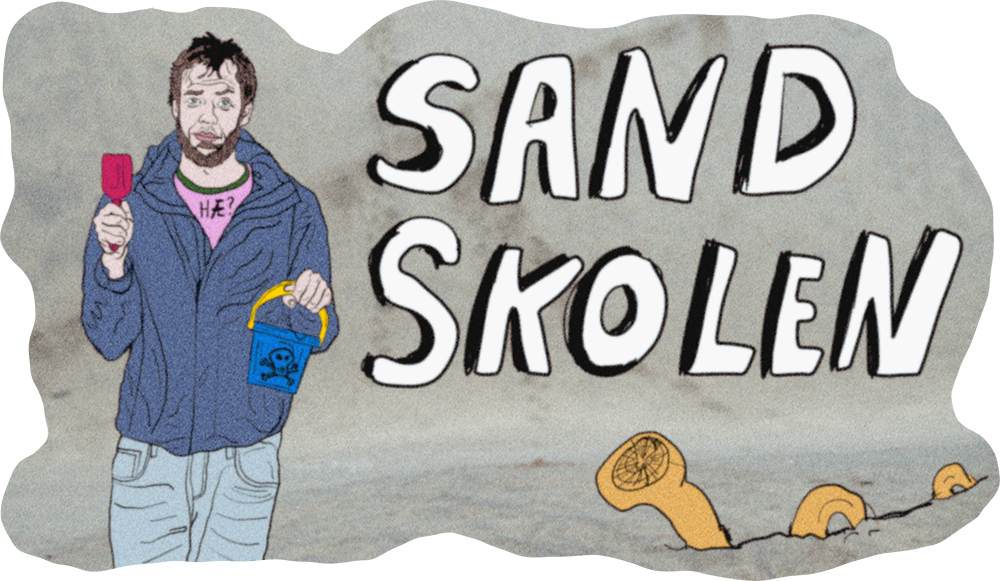
SANDSKOLEN / Velferden project
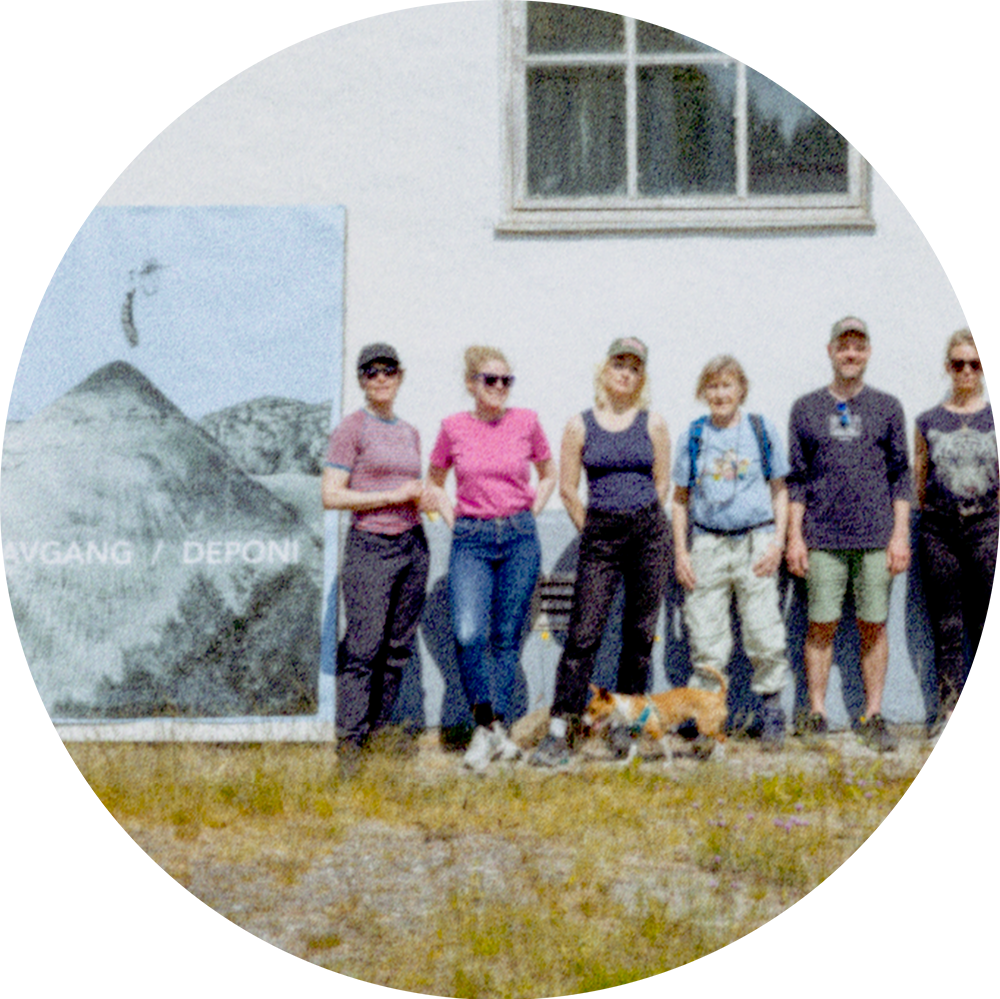
INSPECTIONS 2023