

-
Linda Lamignan (b. 1988, Sandnes) is a visual and performance artist, living in Copenhagen. Lamignan is educated at the Royal Danish Academy of Fine Arts in Copenhagen and the Oslo Academy of Fine Arts.
Linda's works tell stories about the experience of floating between different worlds. Through video, music, objects and performance, Lamignan explores concepts related to migration and diaspora, transformation and love.
With an animistic approach, they work with materials that are linked to industries, histories, living landscapes and cultural relations between West Africa and Scandinavia.
To look down at the ground
When I arrived Velferden I went through a major burnout . My original plan was to build something big and comprehensive, but then I had to think differently. My cortisol levels were skyrocketing, and I had to get back in touch with myself.
When I walked every day from the director's residence up to the studio at Velferden , I noticed all the details and tiny changes in the landscape, as I always walked the same path.
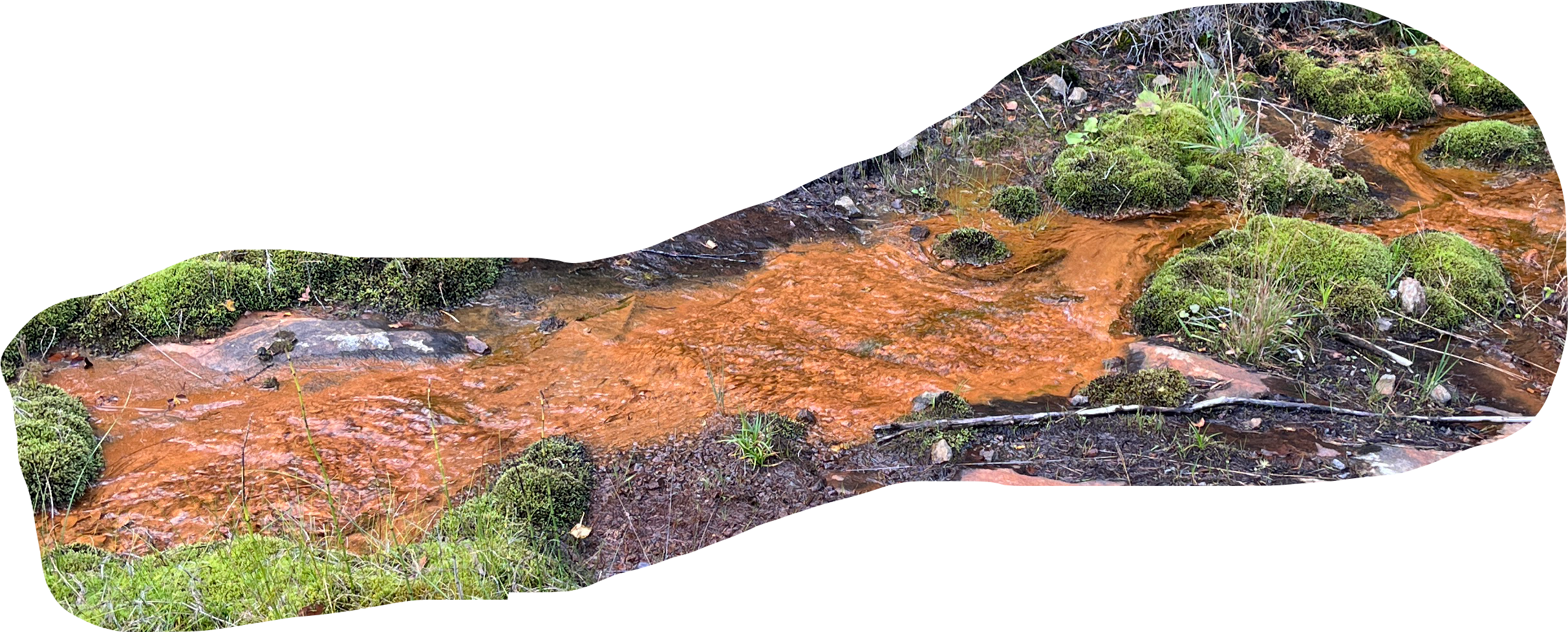
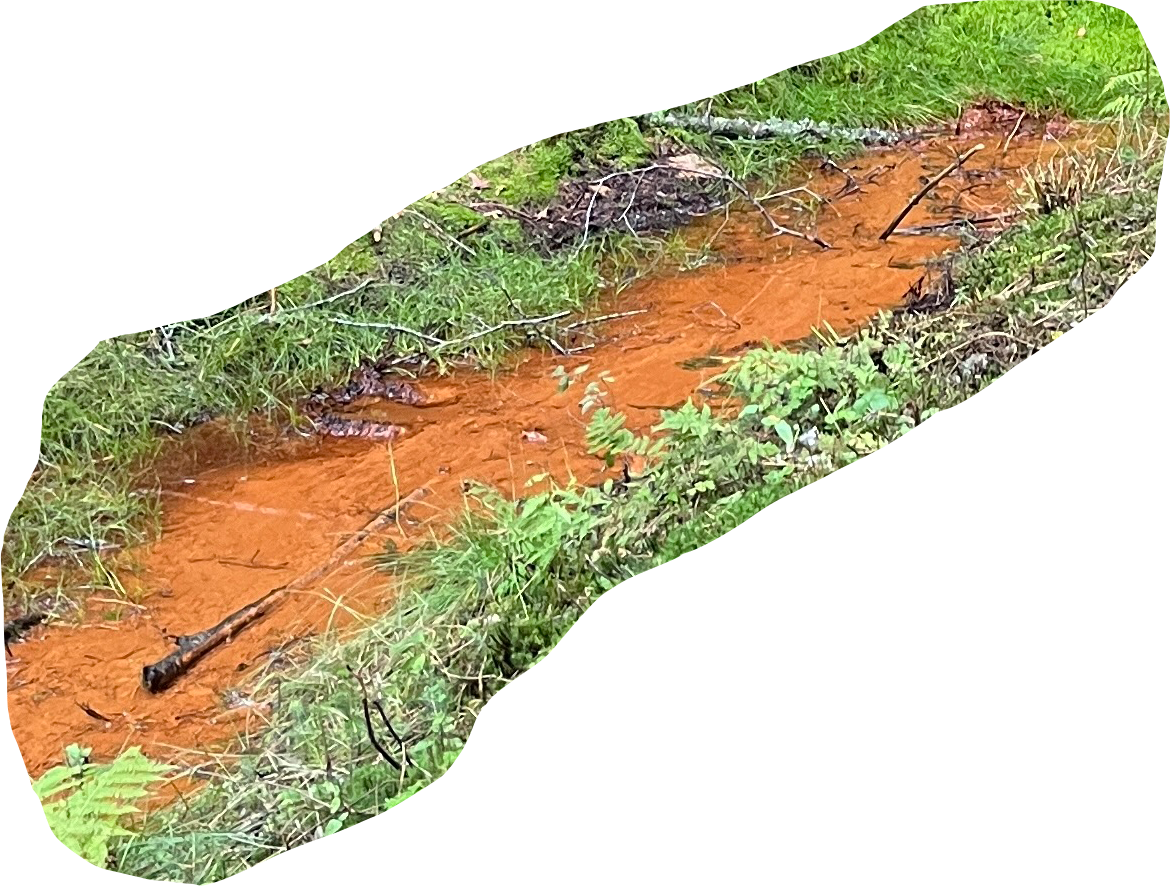
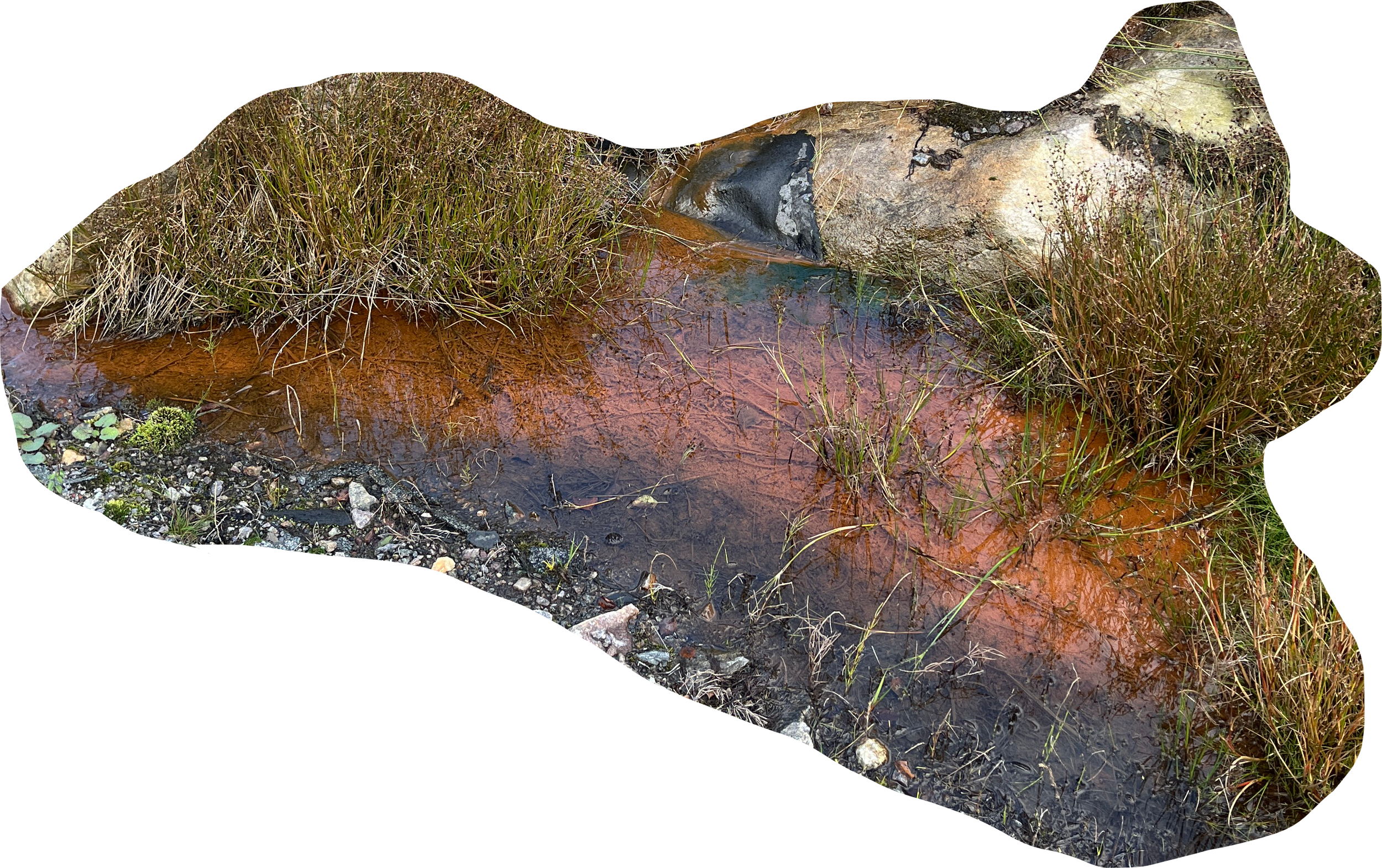
Right next to the first landfill there were some puddles of an intense reddish brown. colour which I was completely captivated by. It reminded me of the soil I brought with me from Nigeria, and I decided to collect soil from the puddles as well. In addition, I found a darker soil. And I wanted to turn it into paint.
I mixed the soil with water and pressed the mixture through a sieve. What came through the sieve, I put in a handkerchief over a bucket. After it had stood overnight, I mixed it with starch and landfill sand, and then I could paint with it.
I have previously painted with wax, and it lays down thickly on the surface, which gives me the opportunity to shape what I paint with. The paint from Velferden is a little more liquidy, but still has a lot of texture.
I also had some kaolin clay – something that has previously been extracted in Sokndal – which I mixed some pigment into, and the clay from Nigeria.
I painted details from various landscapes that I have noticed. From the forest in the surrounding area Velferden , and on a mountain hike elsewhere in Norway, among other things.
Stress is deadly. The fact that people burn out comes from overwork and being overproductive. We work ourselves to death, and it's connected to the ideology that drives mineral extraction. For example, looking at a landscape and thinking about production and profit.
I had a lot of time to think as I walked. I started to question the idea I had originally, where I was going to build something big with a machine. What is the value of doing something big, something that requires a lot of energy?
My reality was that I didn't have much left over. I had to go back to the beginning. Do something small. Collect soil. Be introverted and quiet. It's the opposite of the loud, brutal, expansive process of extraction.
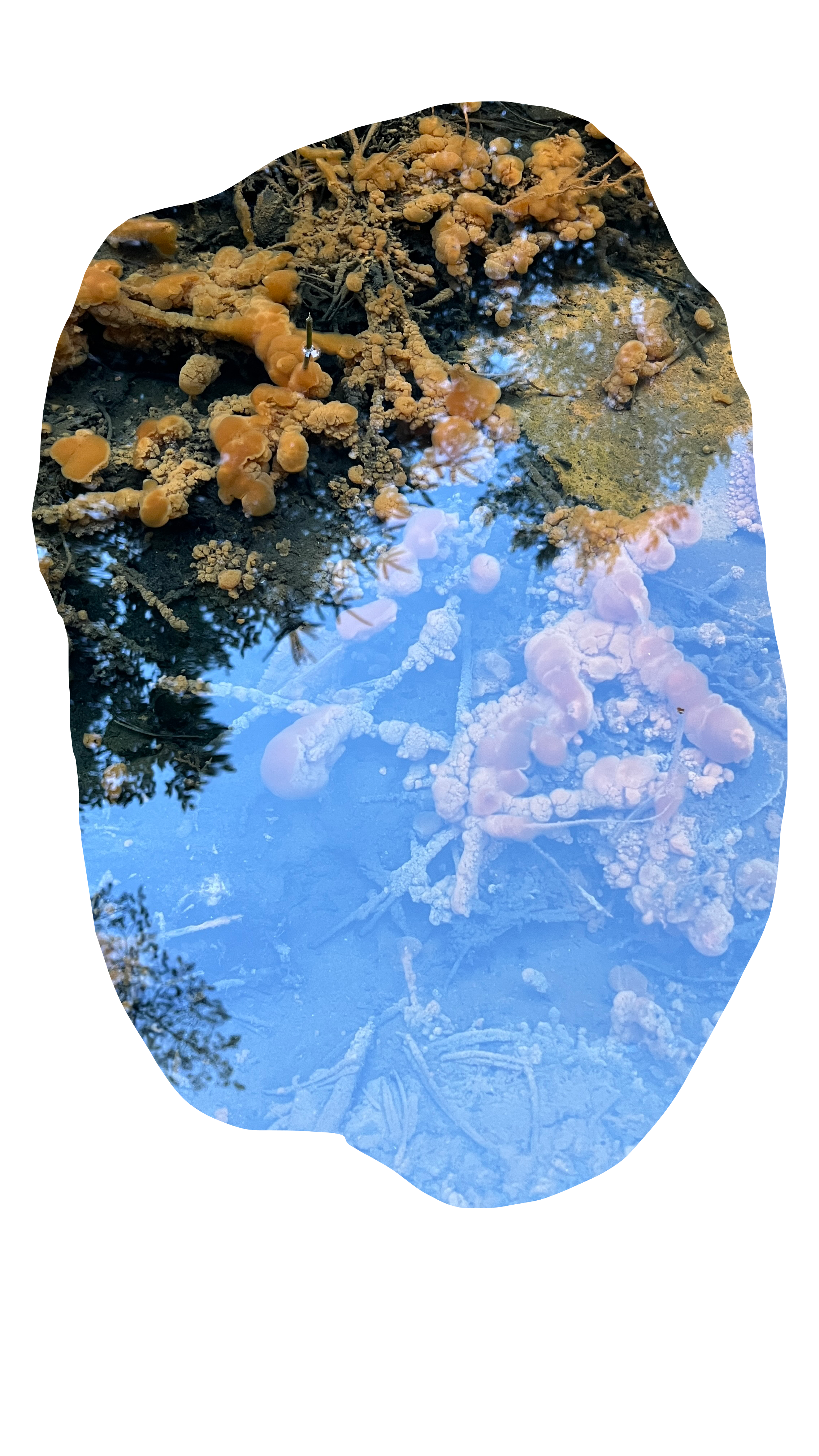
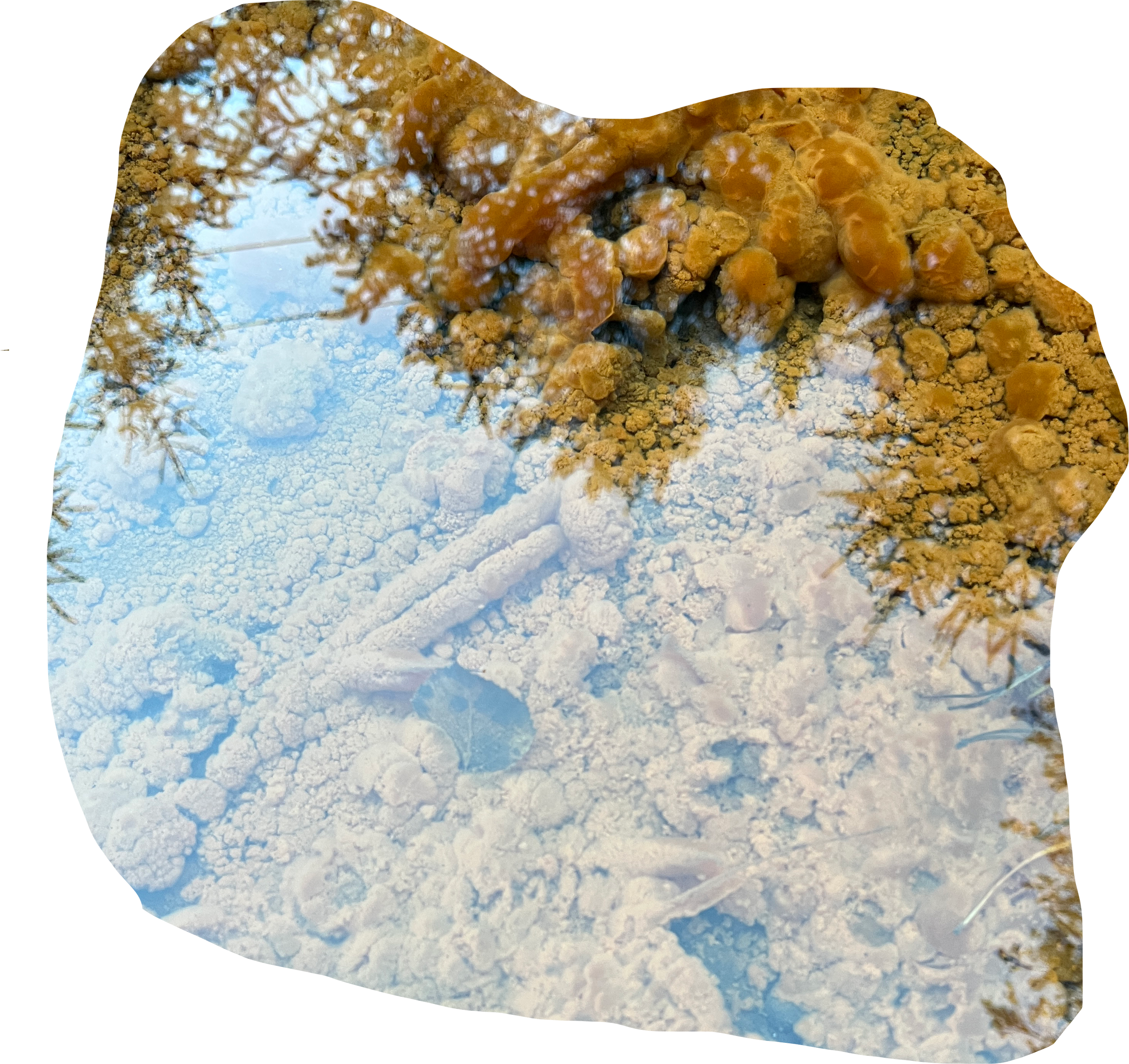
As I slowed down and looked down at the ground, I saw this amazing orange-red color. I found out that it came from iron-oxidizing bacteria that capture and feed on the iron found in the landfill sand. It's incredibly moving that there are tiny organisms that live off of what we consider worthless. I wanted to spend time with them, and use what they've created as pigment. It's a way of relating to the landscape that's not about extraction, but really seeing and interacting with the landscape on its own terms.
MORE FROM WASTE / DEPOSIT :
BEN HIPKISS / welfare crew
BJØRN-TORE BLINDHEIM / researcher
SIRI AUSTEEN / visual artist