RESOURCE FOLDER for the program WASTE / DEPOSIT
The resource folder initially contains local-specific information on the topic WASTE / DEPOSIT .
The purpose of the folder is to build knowledge about the topic, and share this between the participants and other partners in the program.
The folder is organic and will be updated as we go. If there is anything missing or that could fit here, please get in touch - we will be happy to add more information!
The resources below are a combination of images, links, and PDFs.
NB: We do not own the rights to the newspaper articles in the resource folder, and these are only used internally in the program. Please contact us if you have any questions or cannot find a link to the original source material on this page.
In 2023 and 2024 the theme for the Velferden programme is: WASTE / DEPOSIT.
Through a series of inspections, work stays for in-depth study and production, courses, exhibitions and seminars, we take a closer look at issues surrounding historical, current and future disposal of tailings from mining in the Sokndal and Dalane regions.
The program is interdisciplinary, cross-artistic and multidisciplinary and will develop new artistic productions, provide space for in-depth studies in landscape, new research, relational expressions and new thoughts! The program is curated by us who run Velferden ; Hans Edward Hammonds and Maiken Stene.
Inspections:
In the spring of 2023, we carry out 3 visits for groups of about 8 participants from different artistic disciplines and research fields. The groups go on excursions, meet local experts, and eat and talk together. In these meetings, we lay the foundation for further exploration of the potential and issues related to the landfill situations in Sokndal, which can also be seen in relation to global environmental challenges surrounding the disposal and handling of man-made waste.
More on the topic of Waste / Deposit:
In the mining industry, tailings is a term for the worthless residual product that remains after the economically valuable minerals have been separated out. Landfill is the term for a storage site for waste. Waste can be studied both in a concrete and symbolic sense, in different forms of matter and as a cause and symbol of the Anthropocene. We have a waste problem because we have stopped looking at waste as a resource. Landfill and waste in general have become synonymous with something we have to get rid of and that we don't want to be associated with. But situations are changing rapidly here, and we see that the waste we produce is becoming an increasingly large part of the social economy.
Through the programme, Velferden takes a closer look at the unprecedented possibilities buried in these new and strange landscapes. The landfills are interesting places from a biological perspective, but also because they are constructed, man-made and artificial interventions in our surroundings - providing immediate links to science fiction, the imagination and the creative artistic space.
THE SANDBEKK DEPOSIT
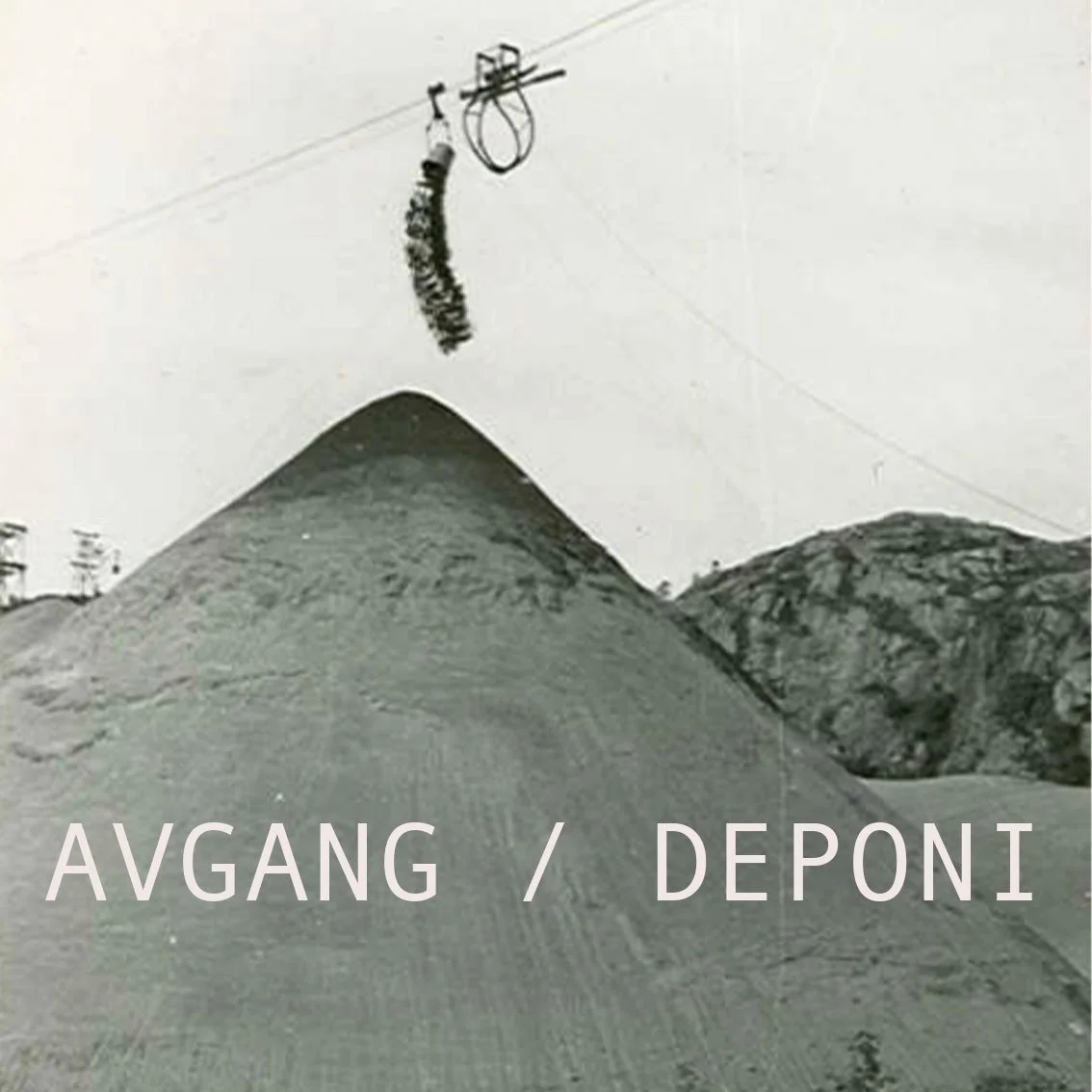
At Sandbekk, in a valley near to Velferden, lies Titania's first deposit of tailings. The deposit consists of 6 million tons of coarse tailings from the extraction of magnetite and ilmenite concentrate in the period 1916-1965. The tailings were transported in iron buckets by cable car, and each bucket held approximately one ton. Today, we at Velferden are active users of the deposit, and we observe how nature takes over the human interventions over time. In the 1970s, the Norwegian College of Agriculture (now NMBU) started a planting project in collaboration with Titania, in order to limit sand escape and to study what kind of plants could possibly establish themselves in this nutrient-poor and contaminated sand. Over a period of 50 years, a relatively large forest and a varied biodiversity have established themselves at the landfill. The growth base is sparse and the forest is vulnerable, and this unique area now deserves further investigation and attention.
Drone photo by David Lamignan

Drone photo by David Lamignan
"Titania A/S had mining operations at Sandbekk from just after the First World War until 1965. From 1935 to 1954, tailings were deposited at Kjerdal. Here, an area of approximately 300 acres is covered with waste from the mining operations. A total of approx. 7 million tons of sand. The Deposit at Kjerdal, where we have been working, covers just under 200 acres, and the planted area is now around 130 acres. At its deepest point, the sand tip is close to 50 meters, but overall it is about 25 meters deep. So we had a rather large sand layer to work on." -excerpt from the final report on the planting project carried out by the Norwegian University of Agricultural Sciences at Ås (NMBU) and Titania as.
To the report on the plant project in the sand deposit at Sandbekk.


TITANIA'S NEW LANDFILL
Photo Maathias Oppedal / NRK - Link to source
We want to compare what we see at the old sand deposit with the development taking place at Titania's newer sand deposit, which, with today's mining activity, is increasing in volume by 300 tons per hour. Titania has a long history of depositing tailings in the sea, but due to protests from various environmental organizations in the nineties, Titania was forced to establish a landfill. The landfill is almost full, and the risk of movements deep down in the sand masses has recently been uncovered.
NVE recently placed the landfill in hazard category 4 and demanded a halt to landfilling until the dam was adequately reinforced. The worst-case scenario was that the dam would break and the village of Åna-Sira, which is located below the landfill, would be buried within minutes. Work on reinforcing the dam is w completed, and in the meantime Titania was granted the permission to deposit its tailings in a temporary valley, which will later be covered with rock. Titania say they have mining plans for the next fifty years. In order to continue to develop the company in line with stricter environmental requirements and waste management regulations, the company will have to find alternative solutions for what the sand can be used for. Titania is involved in several research projects to find alternative uses so that the product can be part of a circular and sustainable economy.
PDF from Miljøringens theme meeting 27. 28. October 2012
LINKS:
- https://www.kronosww.com/
- Link to newspaper articles in Dalane Tidende about the landfill at Tellnes here .
REKEFJORD STONE / NOAH
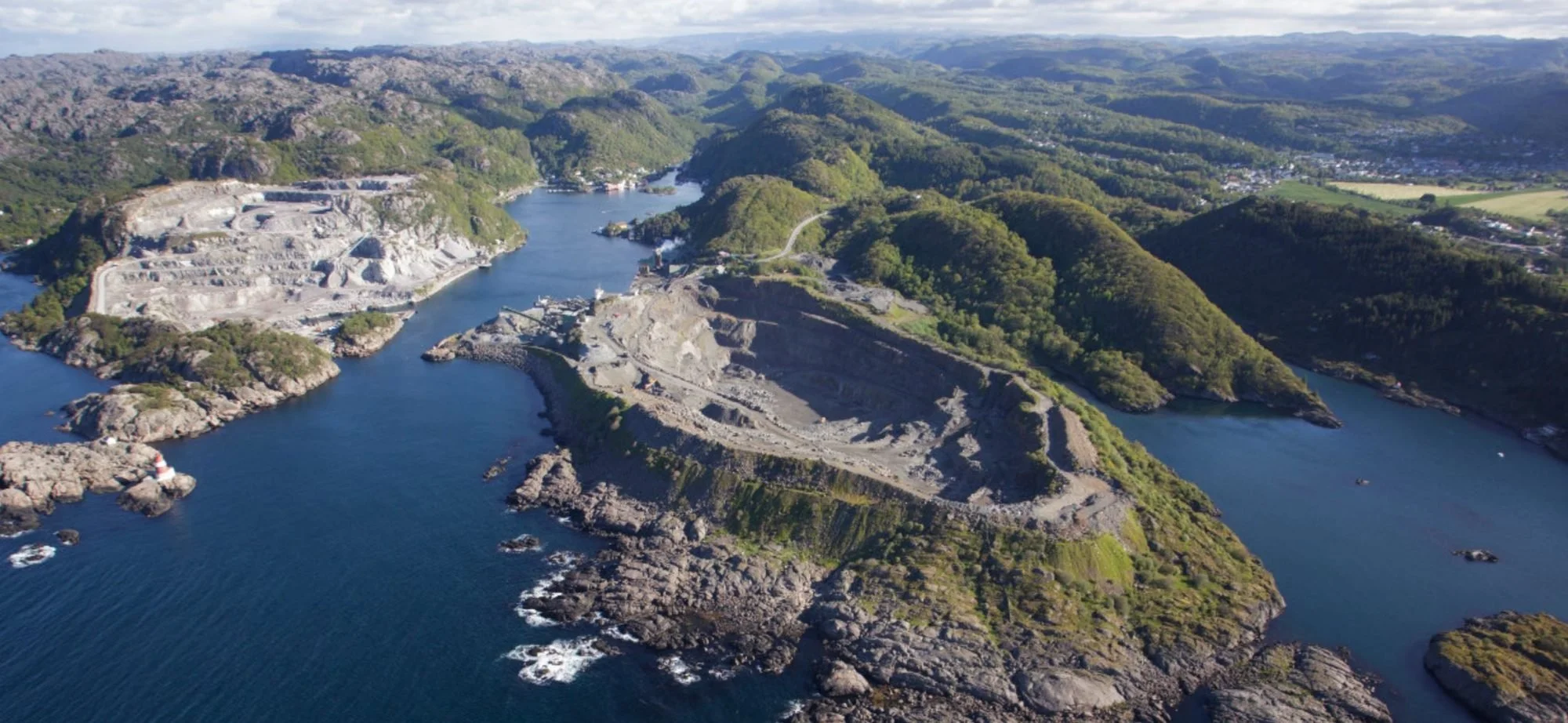
Rekefjord Stone, formerly known as Fjordstein, is a stone supplier in Sokndal (established in the 1960s) that extracts large quantities of stone for road construction in Europe, among other uses. The company was recently acquired by Jelstein-owned NOAH, which operates the Langøya landfill. A couple of years ago, NOAH presented its plans to start planning work to be able to deposit hazardous waste in an older quarry, right out by the sea in Rekefjord. The quarry was to be filled with bottom ash and waste from the construction industry, and then covered with soil to become a new industrial area. The proposal met with great opposition from local residents and politicians, and was voted down by the municipal council before they could start with impact assessments. Rekefjord Stone and NOAH are also looking at sustainable solutions for how they can produce stone, and at the same time accept waste that utilizes and fills the voids left by the extraction. NOAH has a lot of experience in returning landscapes to their original form, and wants to do the same in Rekefjord.
LINKS:
- https://rekefjord-stone.no/
- https://www.noah.no/
- Link to articles in Dalane Tidende about NOAH's landfill here .
NORGE MINING / NORGE MINERALER
Norge Mining is a relatively newly established mining company that is initially drilling and mapping local deposits of minerals that are important for the green shift, mainly Vanadium and Phosphate. The company says that they probably want to establish a mine, but these processes have not yet started. In parallel with the outlined mining plans, a new organization called La Dalane Leve has recently been established, which ensures that the company takes nature, the environment and society into account. The debate is lively in the media at regular intervals.
The company has not yet started extraction, so there is no landfill yet. More information to come.
LINKS:
- https://norgemining.com/
- Link to articles in Dalane Tidene about Norway Mining / Norway Minerals here .
