


What considerations and factors are used to plan and decide on disposal?
-
Knut Petter Netland is a project developer at Titania.
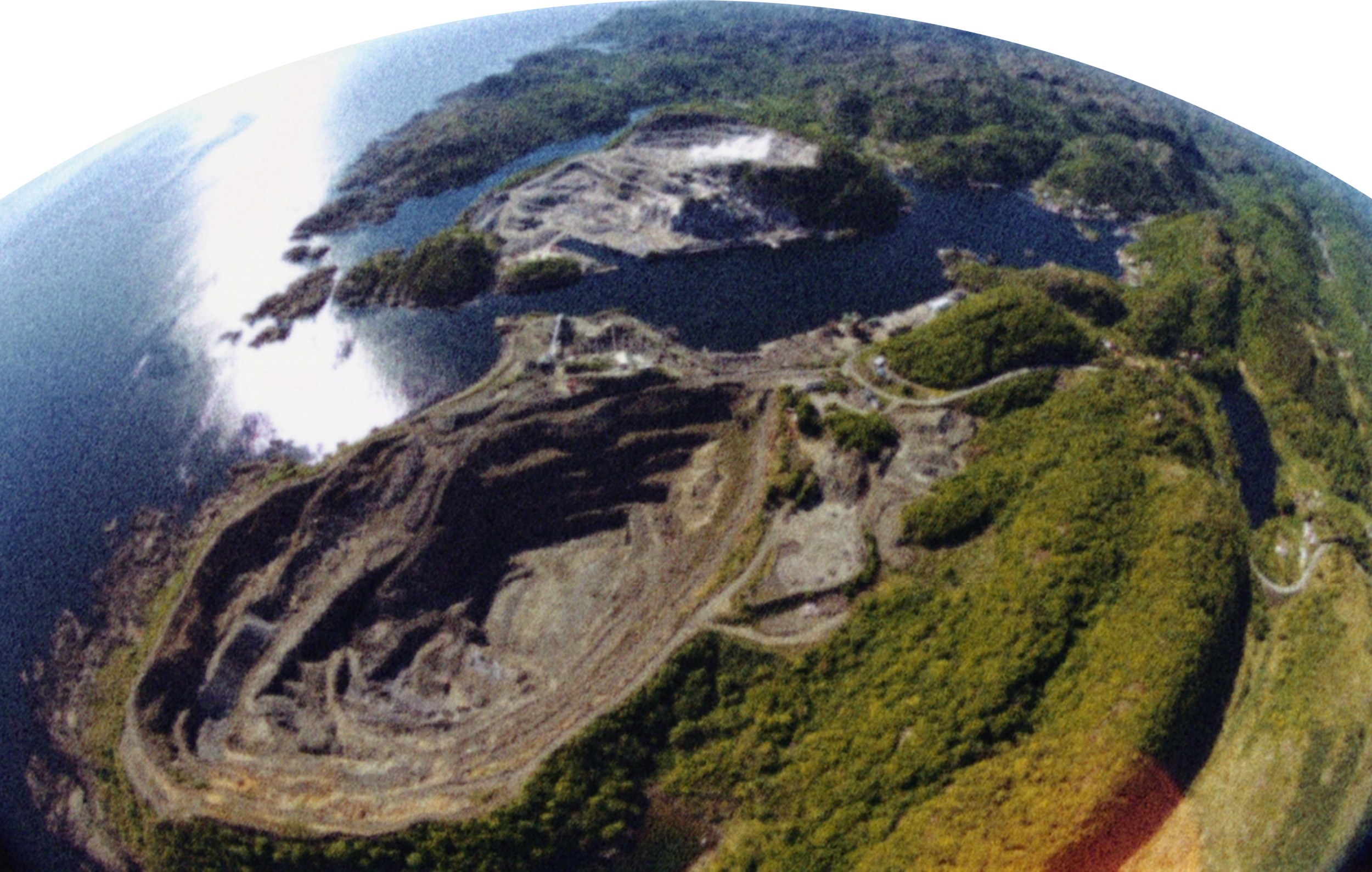
The landfill at Tellenes
The landfill
There are many factors to consider.
When mapping future landfills, the nature and chemistry of each waste must be taken into account, as well as the alternatives available in the surrounding area for location. This is because waste from the different mines is very different, and the surrounding nature and society may also have different types of vulnerability, access to land, etc.
What is common to landfills is that their footprint will largely minimize the amount of life in the area in question, whether it be plants, animals or fish.
Such an assessment, regardless of whether it is deposited under a water table or not, will have to include assessments such as landscape, natural diversity, local environment and outdoor activities, cultural heritage and cultural environment, water environment and pollution, dust, noise, traffic and societal consequences.
The landfill will affect the areas around the landfill, whether it is particles through the air, particles that follow ocean currents, or particles that follow runoff via streams. There are many variables, which makes it comprehensive to map the consequences for a landfill from a process that has not been tested at full scale. A known process produces a known discharge, and it is then significantly easier to uncover the consequences with sufficient accuracy.
Landfill Tellenes
KNA Raceway
Mining departure
Mining waste is the surplus materials we have left after we have ground down and extracted the valuable and saleable minerals from an ore. It has been a consequence of the development of humanity since we moved on from the Stone Age and began to use materials that required extraction. Then we began to produce surplus materials. The fact that it is not saleable means that it must be deposited. If it is to continue to be an ore, it assumes that the income can justify the costs of storage until a use has been found.
For industry, the landfill is what is left with when incentives such as increased sales revenues, high landfill costs and other requirements are no longer able to reduce the amount.
For mine tailings, it also applies that there are largely very limited technical possibilities for making products from this fine material. That is, there is limited opportunity to reduce the amount using economic means.
It follows that any operation on ore will entail the need for a landfill. Even if one had a potential customer for much of the tailings, one cannot base an investment decision for a potential mine on the fact that at the time of investment there is a potential customer for the tailings.
The location and design of the landfill must also be assessed based on safety considerations. There are many examples of structures that have collapsed and caused major consequences for the surrounding community. The authorities set strict requirements and guidelines to ensure that the construction and operation of landfills do not entail an unacceptable risk.

After the landfill is finished, post-use must be considered. It is demanding to know what the need is for a landfill that will not be available for possible post-use for many decades. Most mines that are established have a time horizon of over 20 years in order to justify the significant investments. In recent years, for example, there has been a focus on solar cell systems for the production of electricity. 10 years ago, this was unthinkable. What will be the need in 20 years? We are now discussing possible research work to assess the possibility of mixing waste materials with waste rock, and creating a product that can be used as building soil. This could in turn replace the use of new areas for other purposes elsewhere. If there is to be a market for such areas, it will again require a completely different regional land policy than what is happening today. It is with such perspectives that technical plans should be made, and society should set requirements for design, surface and post-use.


Every mine operates on a non-renewable resource. This means that one day it will end. Mines, open pits and landfills are then left behind. Cavities in the rock are simply filled with water, while the landfill remains. This requires safeguards to protect the environment in the long term, both in terms of stability and pollution.

Society's need for metals will increase as a consequence of increased electrification. This will in turn lead to larger amounts of waste that must be landfilled. It is not possible to replace the increased landfill need with new products. The solution is to look for landfill solutions that meet society's requirements and expectations for the use of nature, both during and after operation. If those requirements then mean that it is not profitable to extract a product from a possible ore, then there is no longer an ore. With the same requirements for living standards, the products must then be produced, and the waste deposited somewhere else.


The open pit mine at Tellenes
MORE FROM WASTE / DEPOSIT :
PIERRE LIONEL MATTE | visual artist
EGIL SOLHEIM / NOAH rekefjord stone

ANNE SVERDRUP-THYGESON / researcher