


-
Pierre Lionel Matte is a visual artist, and his work draws on his own personal biography and daily events, politics, and literature that discuss national identity, xenophobia, ecology, and art history.
He is concerned with how personal encounters with people and places inspire his art in a perpetual process of change. His work is realized through sculptures, photography, installations, books, videos, animation, sound, drawing, painting and text. Some projects are linked to political activism, used by organizations or published in books and magazines.
Matte has exhibited at the Norwegian Artists' Association in Oslo, Trøndelag Centre for Contemporary Art, Rogaland Art Centre, Kunsthuset Kabuso, Greenlight District Art Festival and Chapelle St. Jaques, St. Gaudens in France, among others.
Deposit
Some thoughts;
- A working title as a starting point for many different approaches.
- A specific place in the landscape.
- An action, a situation; a result of a certain type of thinking: what cannot be utilized in the extraction process remains in the landscape, without thought of long-term consequences.
It also expresses a belief in the "rational" engineer's ability to anticipate and solve problems.
How the video project came about:
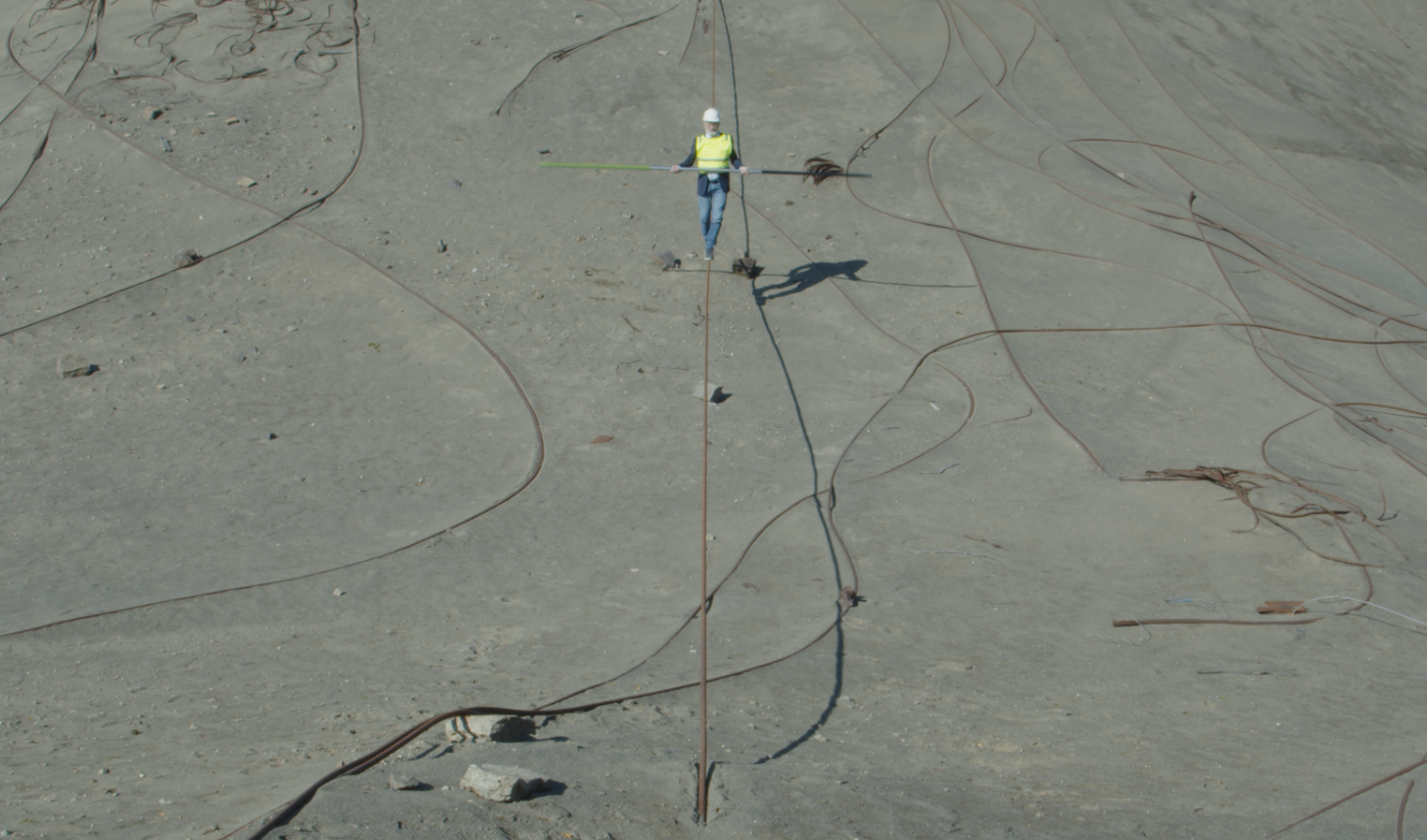
After the visit to Titania and especially the encounter with the mine's current landfill, I experienced the belief in the abilities of engineers as a form of hubris, a persistent belief in the possibilities of technology, despite the series of environmental disasters from recent years. The artificially created landscape with its completely flat horizon evoked associations with the "dead planet", and was best expressed through the guide's use of the term "engineering line".
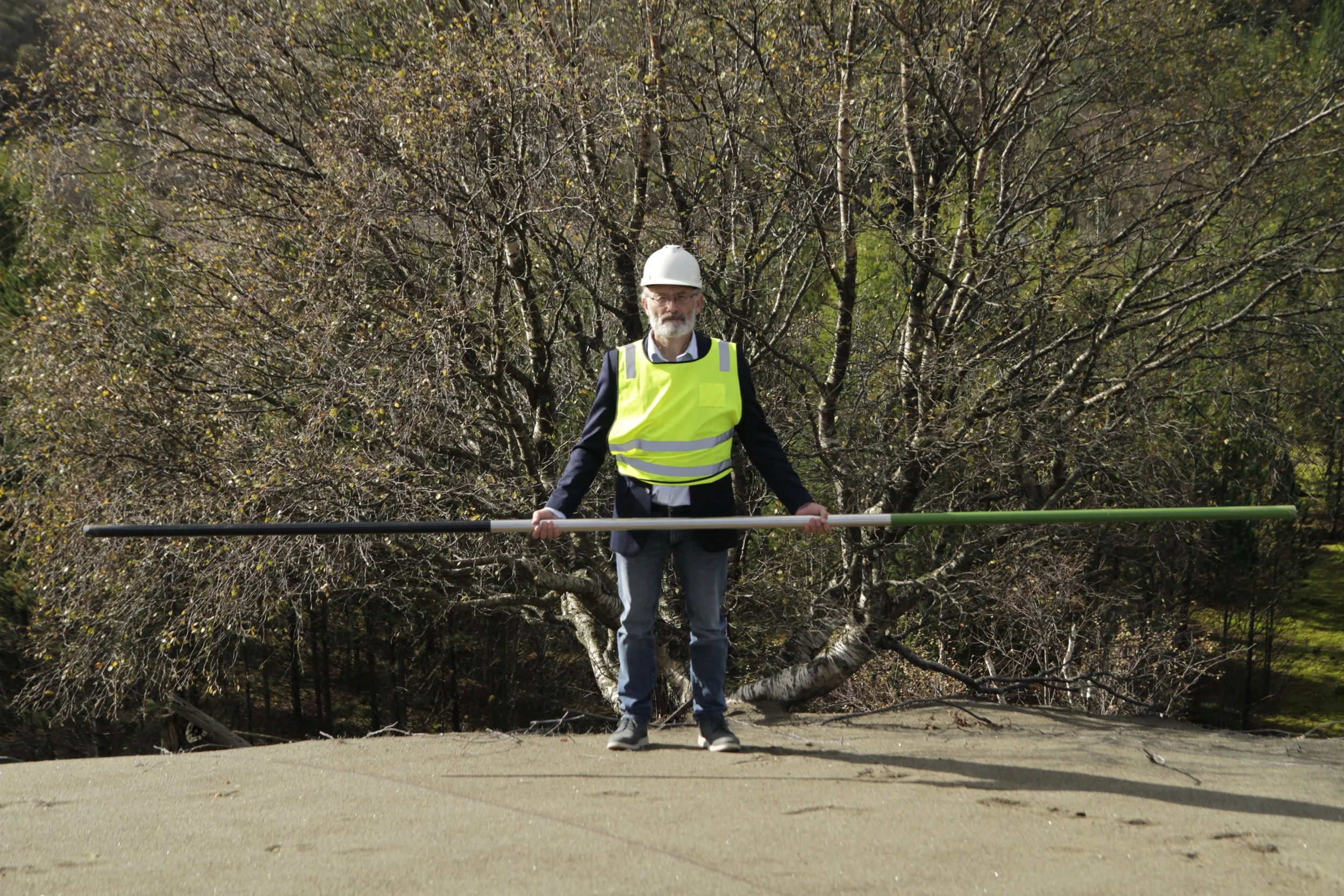
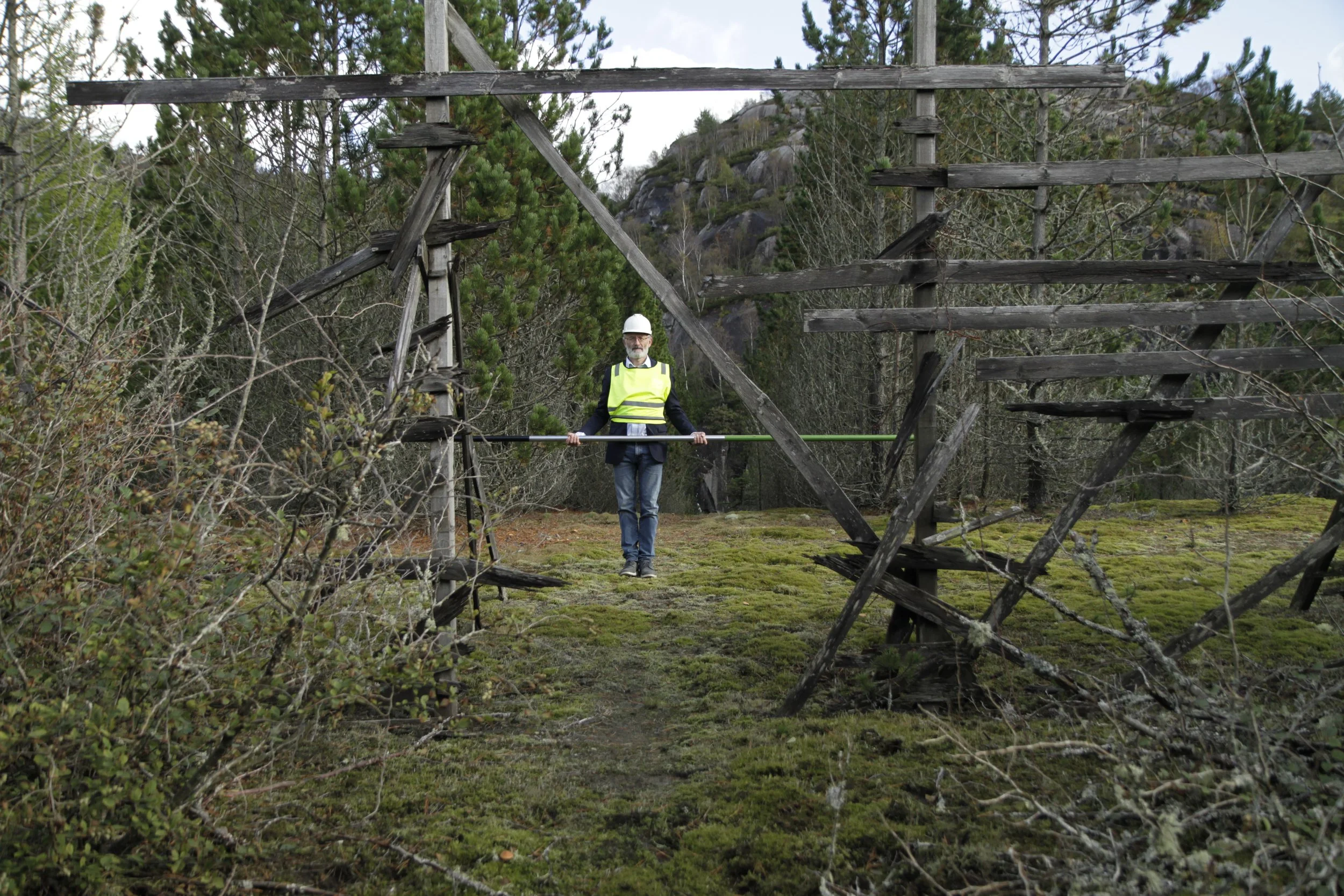
This became the starting point for my idea of the engineer as a "balancing artist"; an anti-hero who in GOOD FAITH hopes to be able to control nature for the good of society (in this case, it is about controlling one's own body in the face of gravity). In the history of modernity, the engineer has been almost like a "demigod", cf. Jules Verne's novels from the second half of the 19th century and the utopian faith in science throughout the 20th century.
The balance artist does not give up, despite adversity, many failed attempts and the associated autumn , despite the ruined landscape. There is a touch of romance about this, like the artist who also doesn't give up, despite adversity. That's why I wanted to be that character myself, try to learn the balancing act FOR REAL. The landscape with its abandoned feel has almost something epic about it, in every autumn when dark clouds slide across the sky and when the sunset casts long shadows. The lonely engineer on his wire may be reminiscent of the lonely wanderers in the paintings of Kaspar David Friedrich.
Significance for my own work:
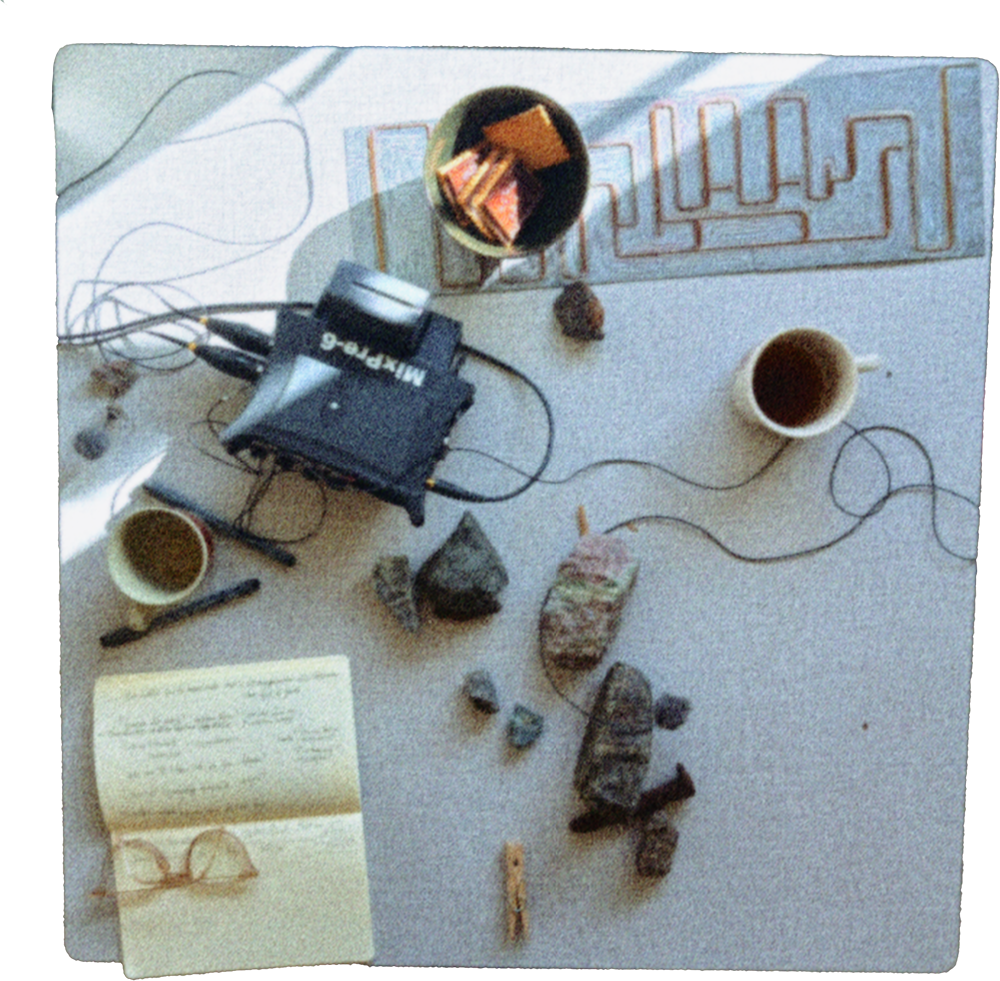
I have previously worked with video and sound as a response to a given place and situation (Valdres Folkemuseum in Fagernes, Herøya outside Skien and at the Nordic Artists' Centre in Dale). In all of the works, the video's soundtrack has been a "composition" based on sounds made by specific actions performed on site.
This will also be the case for my contribution to WASTE / DEPOSIT , this time also with the assistance of two young people from the village. This way I become more aware of the interaction between sound and image, and gain more experience with the narrative potential of sound. I am interested in how sounds from the environment can be structured so that it ALMOST becomes music, somewhere between documentary sound and created music.
MORE FROM WASTE / DEPOSIT :
SIRI AUSTEEN / visual artist
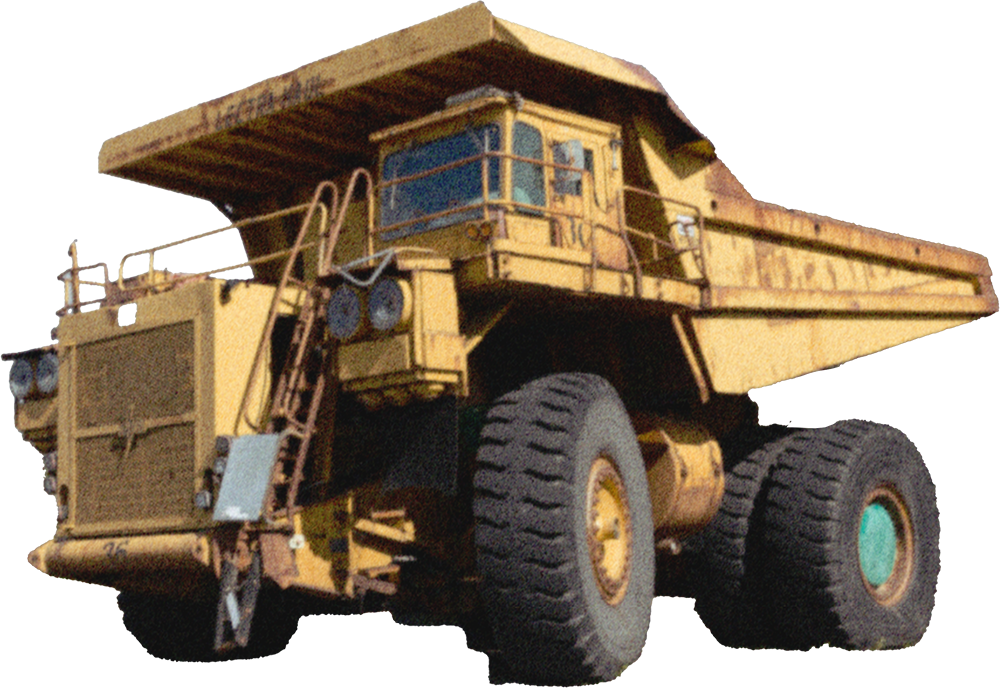
KNUT PETTER NETLAND / titania
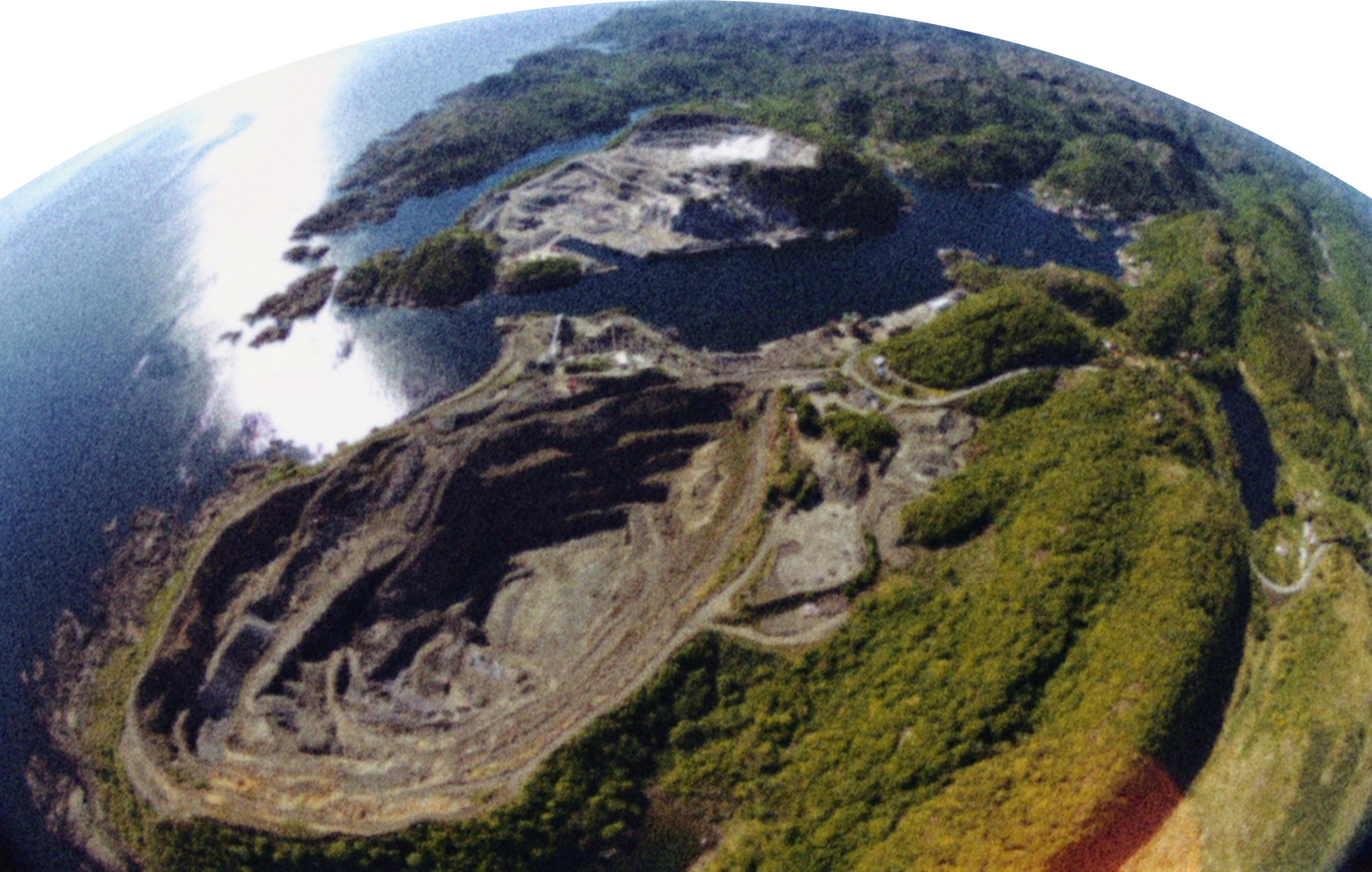
EGIL SOLHEIM / NOAH rekefjord stone