


-
Ingvild Stene (b.1976) comes from Sokndal and lives in Flekkefjord. Stene is engaged as a chef for Velferden , and works daily as a teacher and educator.
Unrest and rebellion in Iceland
A memory of a village, a business, and a child who saw the future breaking apart.
In the late 1980s, I grew up in a village where Titania was something we were proud of. They sponsored teams and associations, stood up locally and were visible in everyday life. It was where our fathers worked, and where we knew many of us would end up. We had stories about grandparents who had been there before. Summer jobs from the age of sixteen were almost a given.
Then one day the language began to change.
The adults spoke about Titania, in a slightly different tone. The sentences became shorter. Voices lower. A new word appeared, and hung there: landfill. It was said together with words that had weight, even if I didn't fully understand them: costs, studies, requirements, profitability.
I actually knew what landfill was.
It meant sand. Large amounts of sand, moved from sea to land. I had seen it before. Old Sandbekk. A disused Titania mill. Large piles of sand, desert where nothing grew. Ghostly buildings from old industry, empty windows and silence. A place that bore the mark of someone having once made a bet – and then given up.
In my head, landfill also meant something else: calculations that didn't add up.
Expenses that were too high. Decisions that were made elsewhere. The fear was not only that the mine would be moved, but that it might not be invested in at all.
That Titania could choose not to.
And if they didn't invest, Dad could lose his job. In the late 80s there was little room for error. People had built, borrowed, planned for the future. There was pace in the village, progress and expectation, but also a tight economy beneath the surface. We children noticed it in the adults' unrest, even when everything looked successful.
Then the unrest got a face.
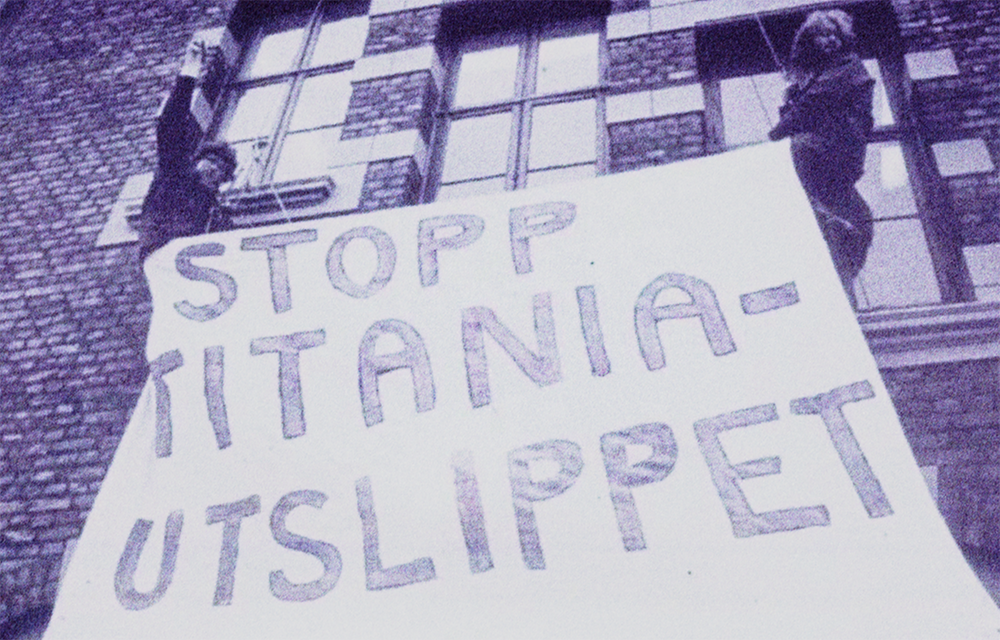
It was said that people from Bellona were coming to the village. We children had understood that it was Bellona who was behind the demand for a landfill. They talked about the sea, about waste materials, about responsibility.
For me – and several others – it was very clear: Bellona would change something that already worked, and if that happened, it could cost us our security in life. If Dad lost his job, we would be poor!
The day Bellona came, we ran after them. We threw stones, we shouted and chased them. Children's hearts beating fast, with one goal: We had to chase Bellona away. They couldn't ruin our lives!
The car turned onto the main road and disappeared.
Portrait of Ingvild Stene.
Private photo from the 80s.
MORE FROM WASTE / DEPOSIT :
PAUL MAGNUS LUNDØ / filmmaker
KNUT PETTER NETLAND / titania
RUNE HAALAND / environmental activist