

-
Erling Svensen began diving in 1976, and underwater photography a couple of years later.
More than 5,000 dives and ten times as many photographs later, there are few divers or marine biologists in Norway who lack knowledge of Erling's work. He comes from Egersund, and is one of Norway's leading underwater photographers. His archive has more than 70,000 images of plants and sea animals.
Erling is now involved in scientific projects in Norway, working with researchers and specialists in marine fauna. His main interest is underwater photography and marine biology, and he is driven by the desire to document and educate about marine life. Over the past decade, he has discovered several new species for Norway, and some new species for science – one he discovered was named after him: Penicillus svenseni.
In the future, he will spend most of his energy fighting for the ocean and against pollution, as well as the plundering of its resources.
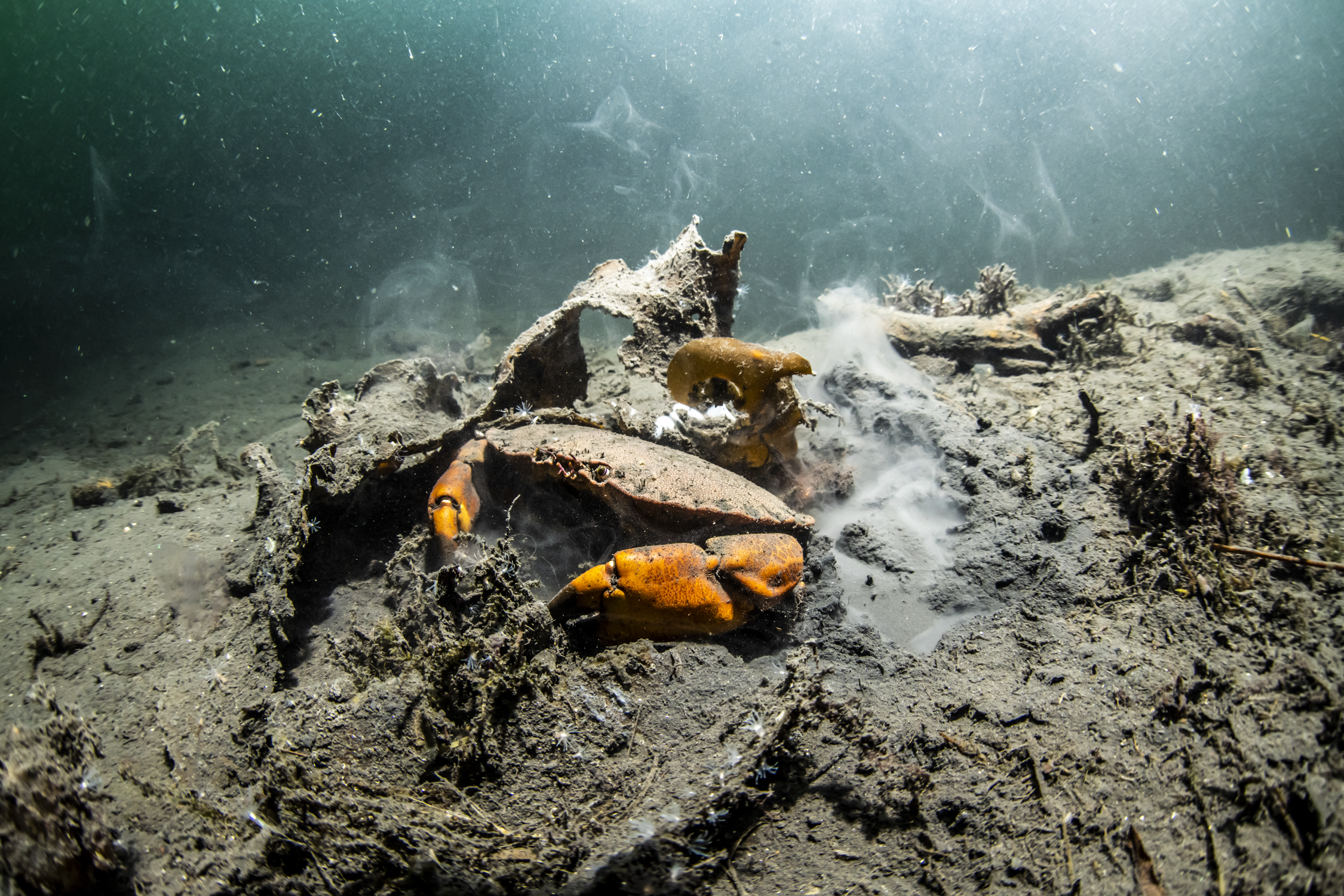
Jøssingfjord 20-12-2019:
A hermit crab is looking for food. The mine mud is so fine-grained that it easily "goes up in smoke" when the crab digs in it. Around the crab you can see algae that have fallen from shallow water, and you can make out a few small sea anemones. You will also notice that the crab has a yellow-orange colour – discolored by the mining mud.
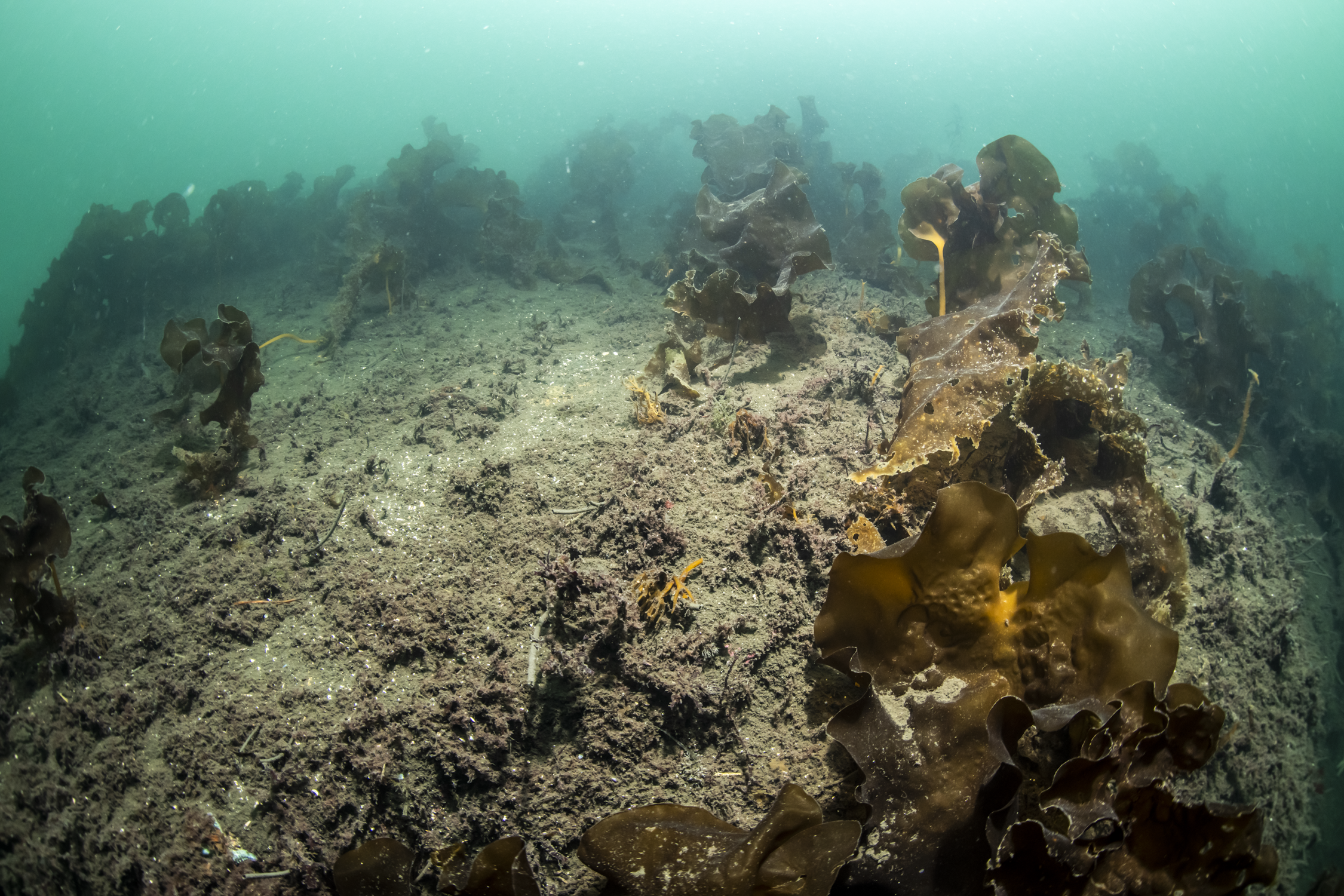
Jøssingfjord 20-12-2019:
Up at a depth of two meters, algae and rocks are covered by the ongoing discharge of mining sludge that is taking place in the Jøssingfjorden. Visibility is never good, and the algae cannot grow further down than three meters here compared to more than twenty meters out to sea. The algae in the picture is sugar kelp, and among the mining sludge you can see some red algae that are barely surviving.
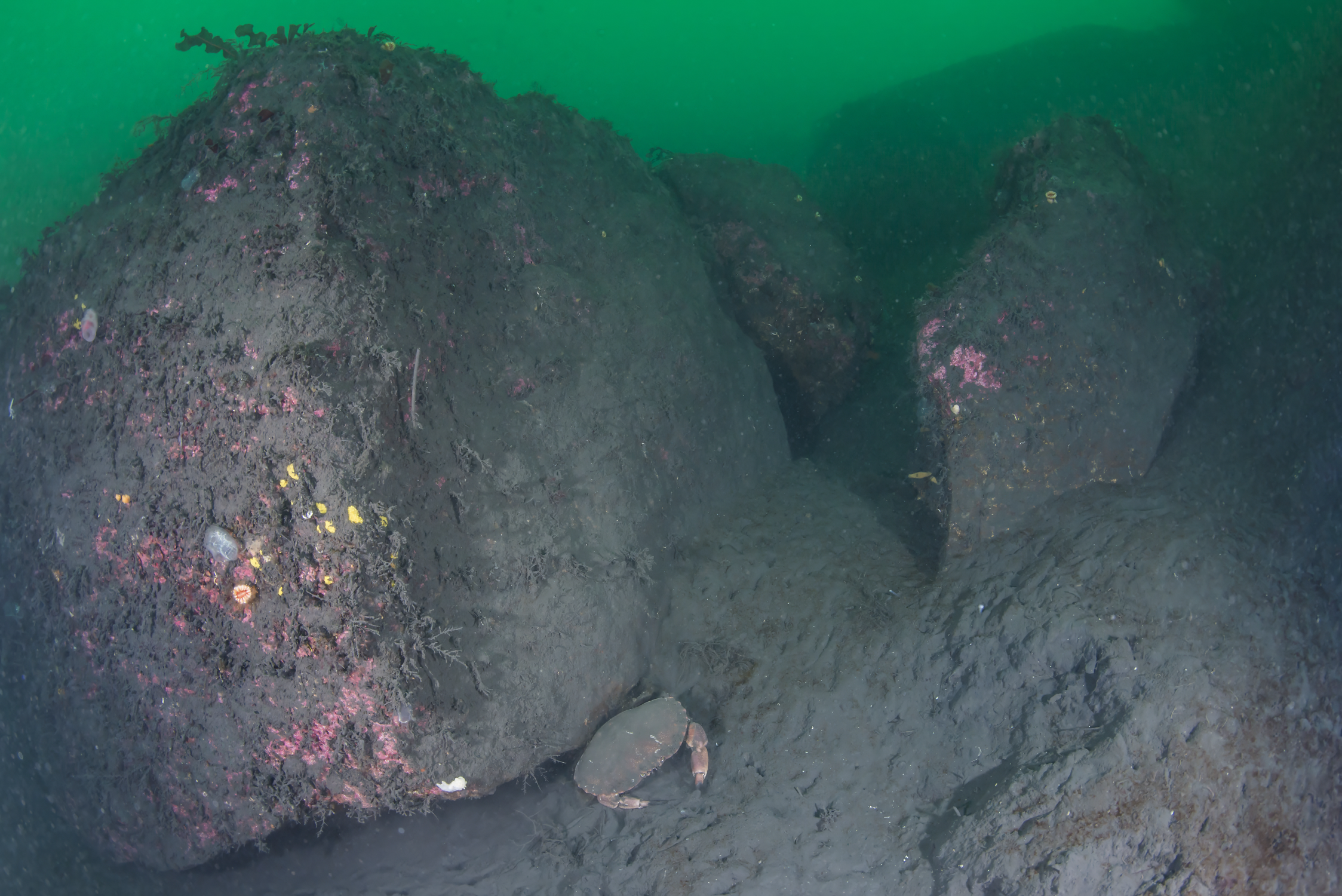
Jøssingfjord 10-06-2016:
A photo taken in 2016. The crab is trying to find something to eat in the heavily polluted fjord. The rocks and mountains are covered in mining sludge. You can see a couple of goblet corals that are doing well, and on the left, blue-white sea urchins.
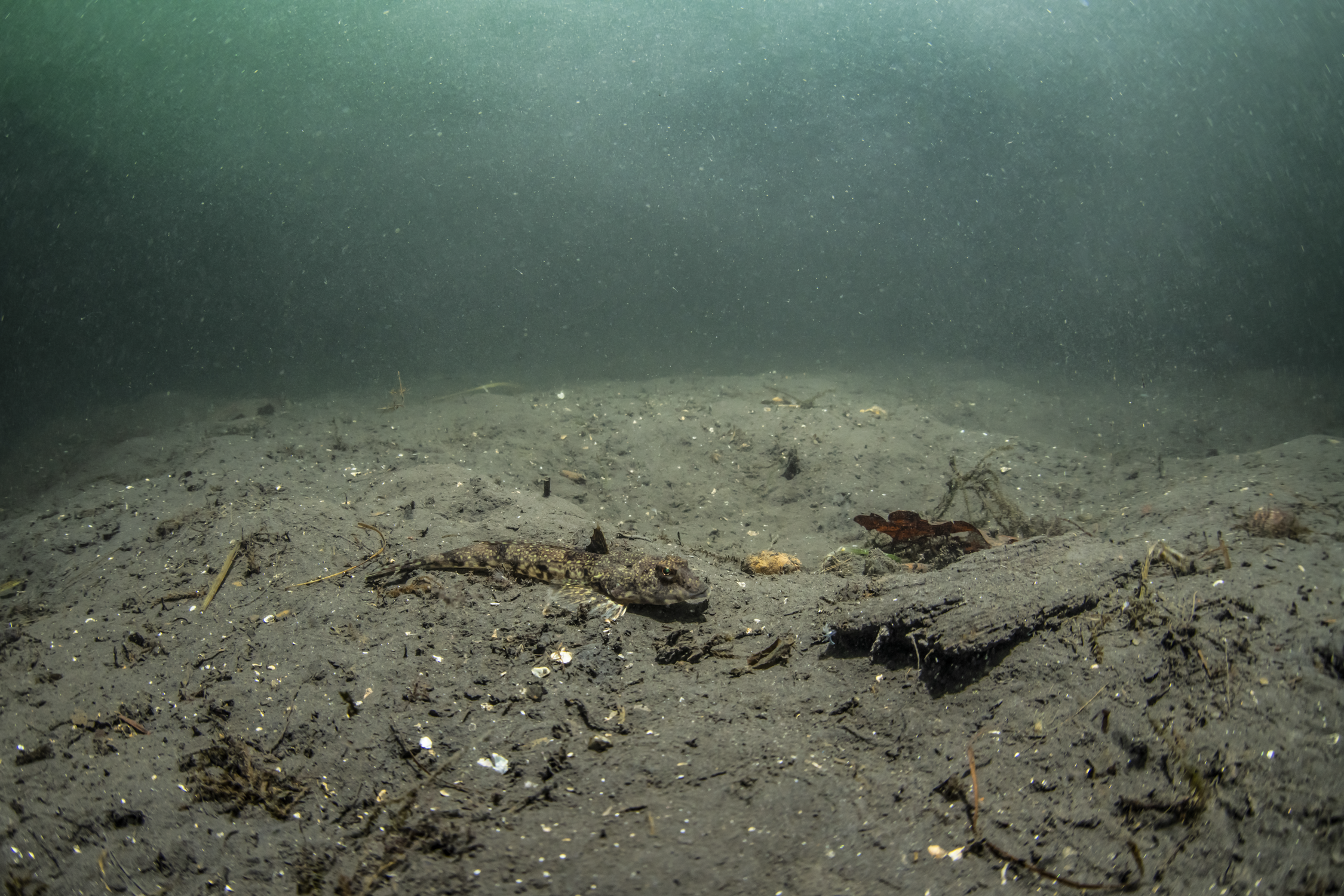
Jøssingfjord 20-12-2019:
Down at a depth of twenty meters, there are not many living creatures to be seen. Here you can see a female wingfish lying on the heavily polluted seabed. On the log right in front of the fish's nose you can see a small blue-white sea anemone. There are usually thousands of these in our fjords.
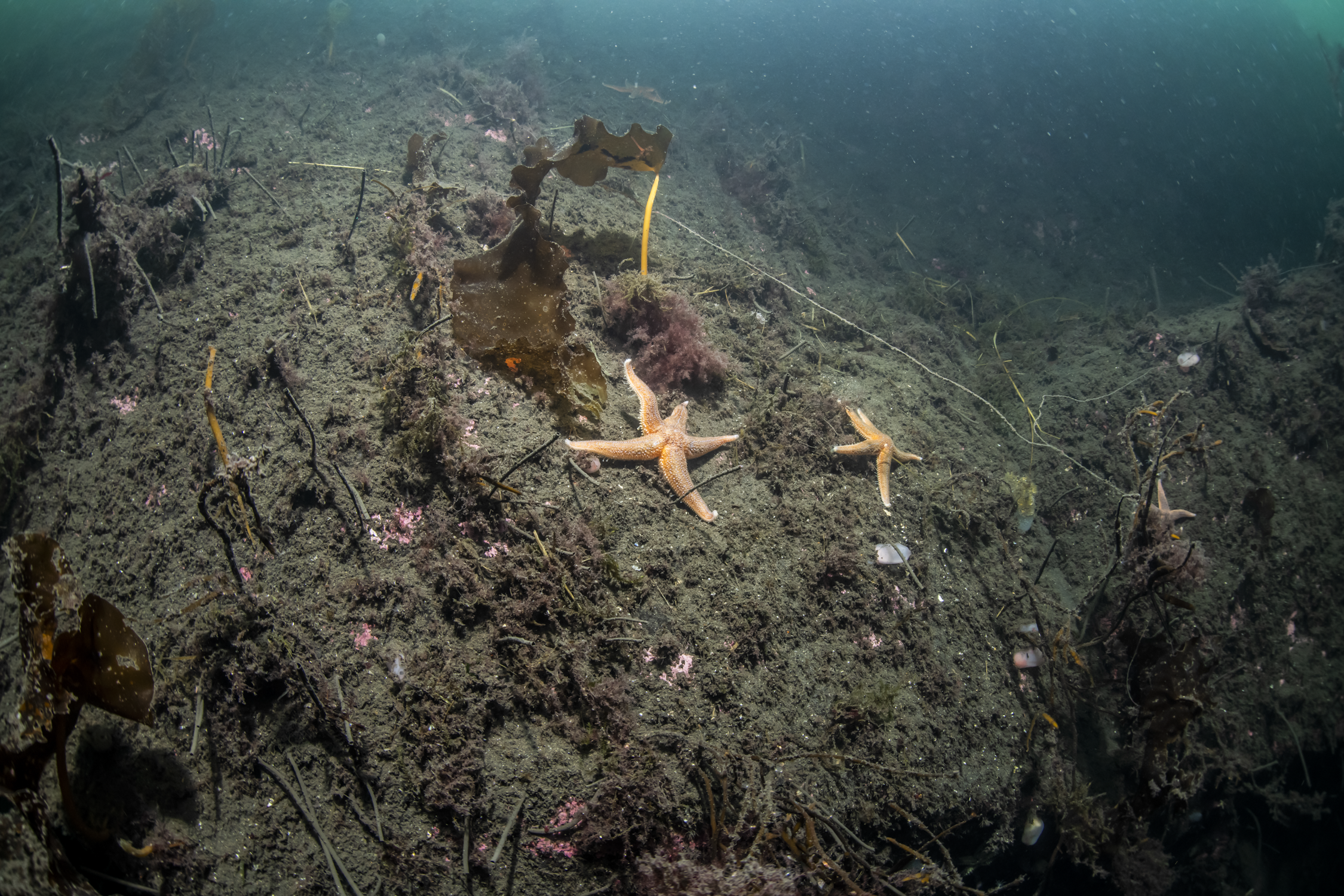
Jøssingfjord 20-12-2019:
In very shallow water, the rock is always covered with red algae. You can just barely see the red algae in openings in the mine mud. Starfish, sea urchins and tube-building bristle worms are almost the only animals that manage to survive, although in very sparse numbers.
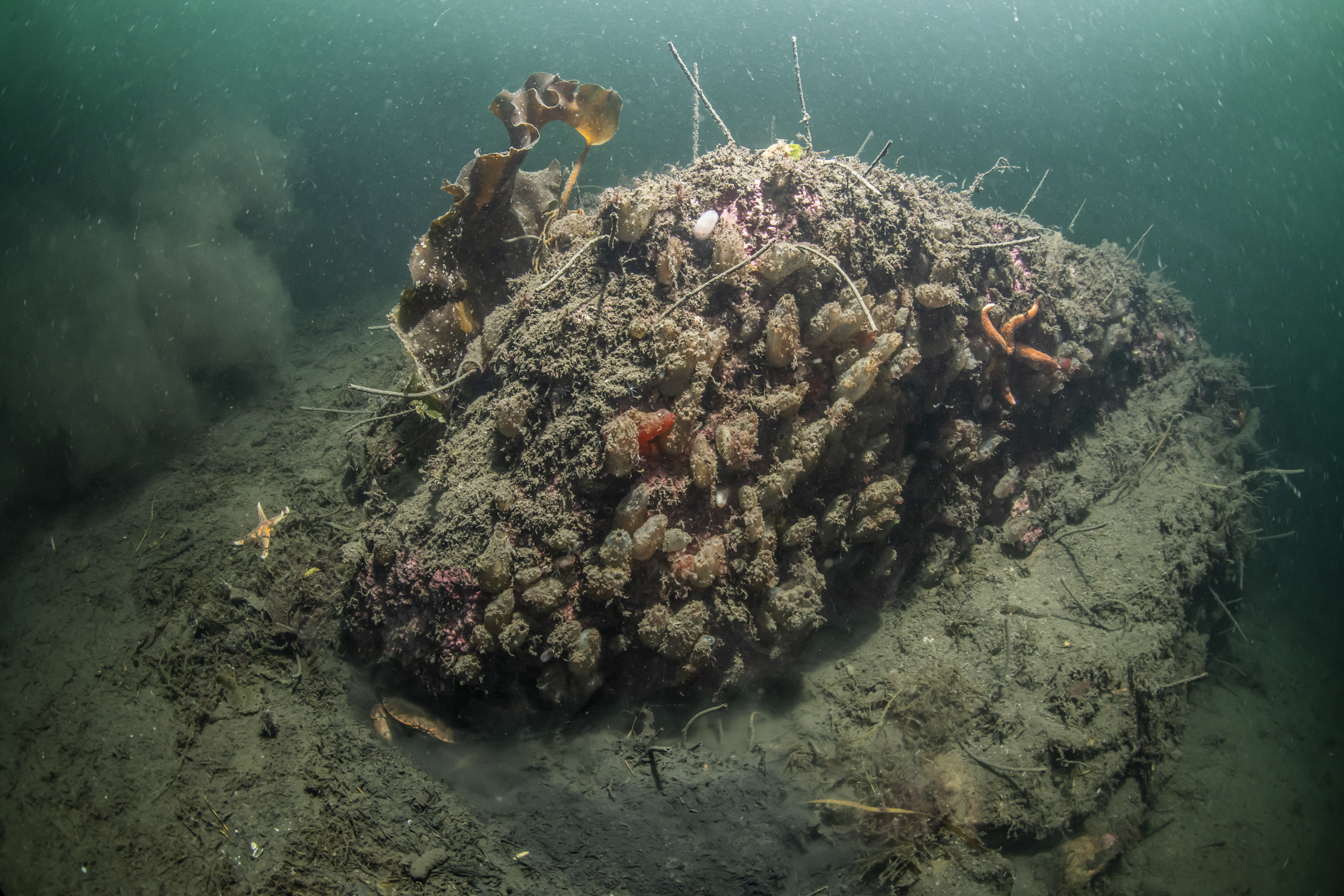
Jøssingfjord 20-12-2019:
At a depth of three meters, there is only one sugar kelp left. The mountain beak has some sea pouches, and a couple of starfish crawl around looking for food. Under the mountain beak is a common hermit crab. It digs for food down in the mine sludge.
MORE FROM WASTE / DEPOSIT :
INGRID HALLAND / art historian
RUNE HAALAND / environmental activist
INGVILD STENE / local