
Photo: Ljerka Kukurin
Maiken Stene and Hans Edward Hammonds are curators for WASTE / DEPOSIT .
The program is based on their own artistic practices in response to the issues we find in Norway's largest mining municipality, Sokndal.
-
Maiken works as a visual artist and has her studio in the Office Building at Sandbekk, where she produces art for exhibitions and public artworks. Maiken is educated at the Malmö Academy of Fine Arts and The Cooper Union School of Art in New York.
Maiken's practice is about her personal relationship with landscape, and how historical representations of landscape continue to influence our relationship with nature today. Stene is best known for her painting practice, which she presents in the form of scenographic installations mixed with video, sculpture, text and a professional programme .
-
Hans Edward Hammonds (b. 1983) is a visual artist who lives and works in Stavanger, but often visits Sokndal and Velferden. He also grew up partly in Flekkefjord and has a childhood connection to the landscape of the Dalane region in general. Hans Edward has a master's degree in Fine Art from The University of Auckland in New Zealand.
Hans Edward Hammonds works at the intersection of social practice, installation and site-specific projects. Through participatory processes and material-based investigations, he explores how art can create situations where people, materials and places interact. His work ranges from relational and dialogic projects to interactive installations.
TRASH TALK
Through the program WASTE / DEPOSIT, Velferden has wanted to facilitate a dialogue around mineral extraction where art becomes a natural part of the conversation.
By Victoria Durnak
– We saw that artists who came to visit us often took the same issues as their starting point, says Hans Edward Hammonds.
Together with Maiken Stene he runs Velferden Centre for Contemporary Art in the old buildings of the Titania mine in Sokndal, Rogaland's southernmost municipality. Since 2019, the two artists have facilitated artistic production for visiting artists, as well as organized a number of exhibitions and events.
Sokndal is Norway's largest mining municipality, and Velferden is surrounded by tailings sand from Titania's mining operations, which continued in the area until 1965. At that time, black iron ore was mined and converted into titanium dioxide, a white pigment used in paint and toothpaste, among other things.
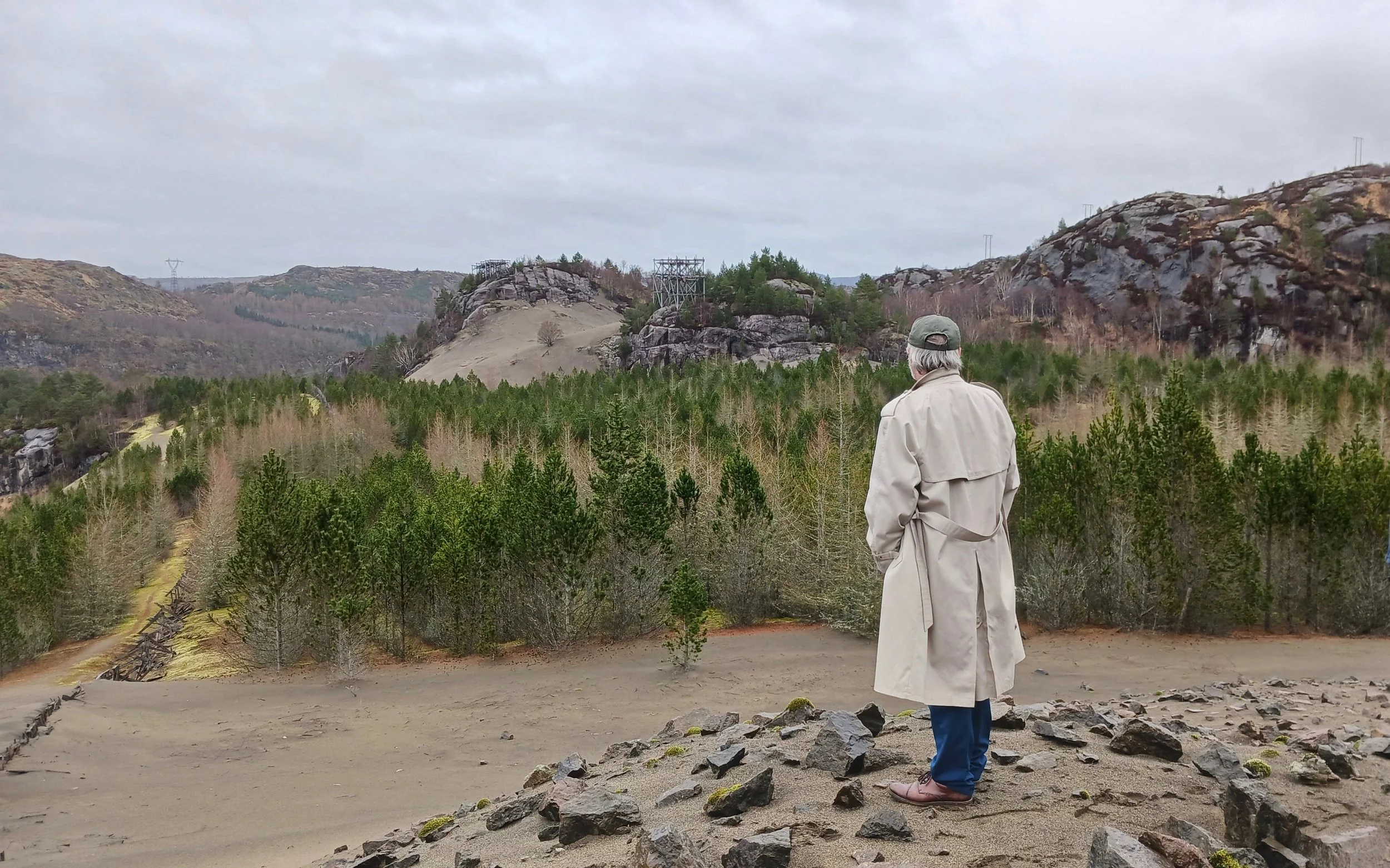
Environmental activist Rune Haaland looks out over the deposit at Sandbekk.
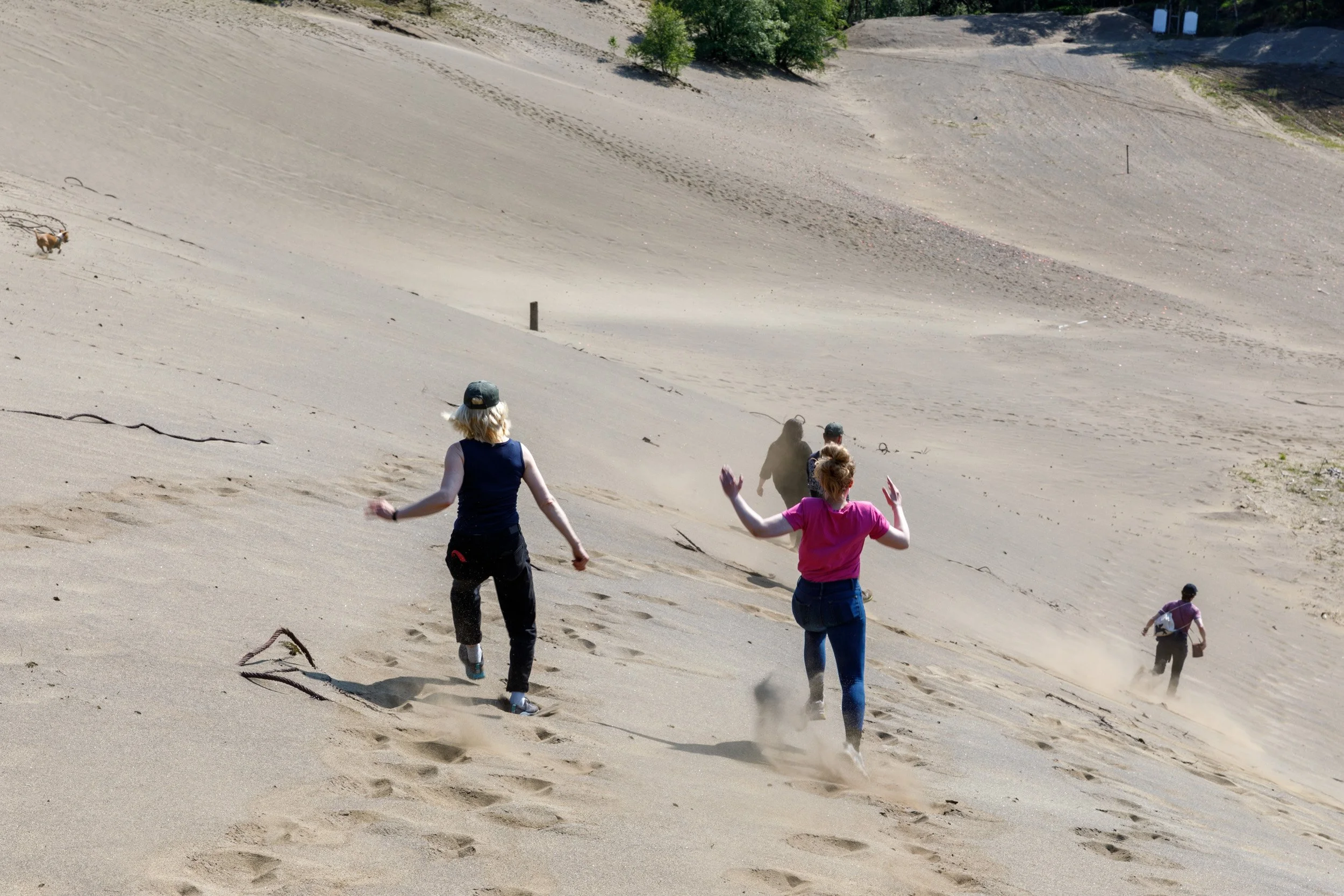
The deposit at Sandbekk
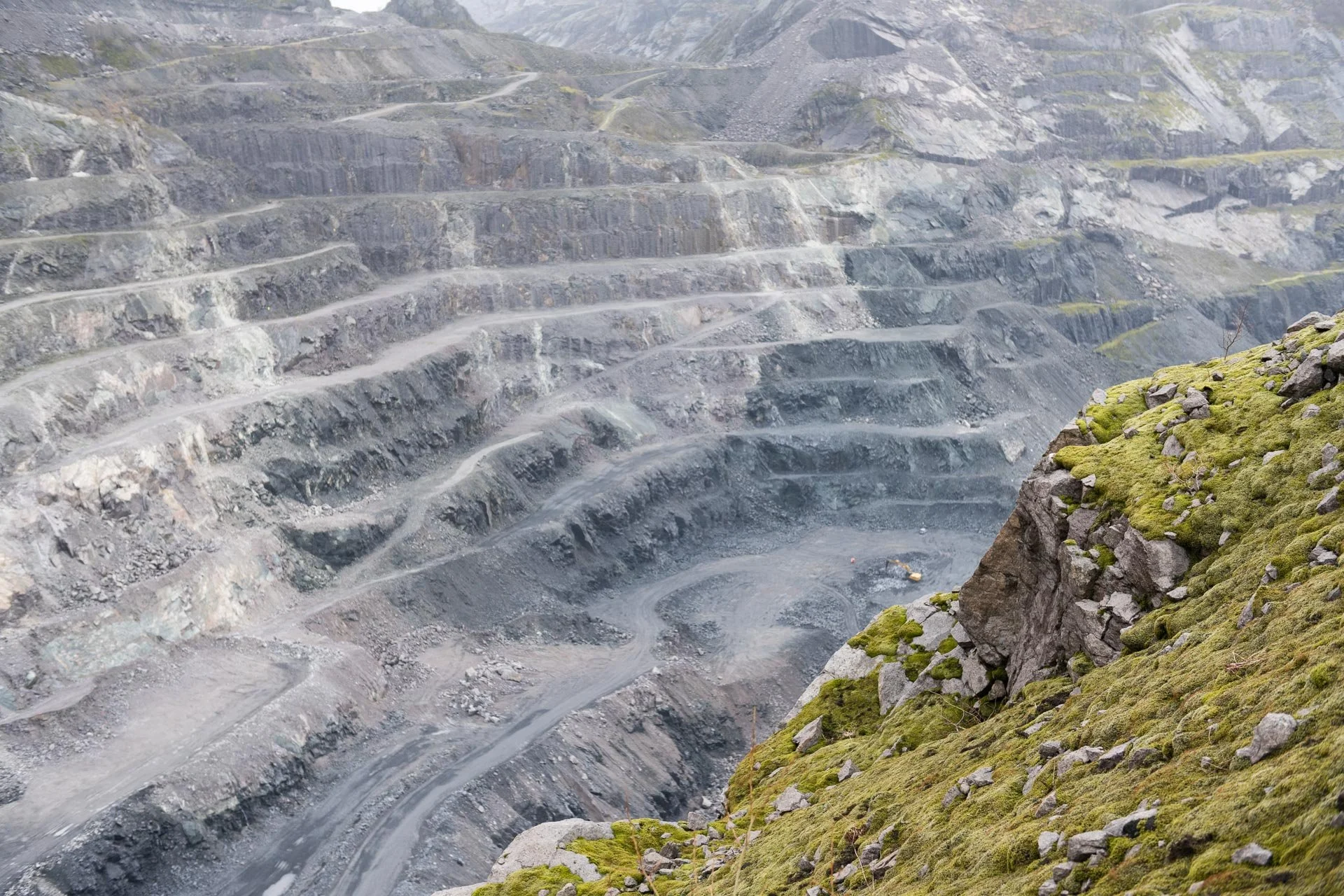
The open pit at Tellnes.
Inspired by their immediate surroundings, the duo decided in 2022 to look into issues on historical, current and future disposal of mining waste in the region. They called their 2023-2026 programme “WASTE / DEPOSIT,” and over the period, a number of artists, researchers and representatives from the mining industry have been involved.
- There are so many layers in the deposit. It is waste, but it is also a cultural landscape, shaped by industry.
At the same time, it is a potential resource, and a fantasy landscape, says Hammonds.
One of the goals of WASTE / DEPOSIT has been to work process-oriented over a long period of time. The duo wanted to explore how artistic methods can be included in other contexts to promote dialogue about important things in society. They believe that through artistic processes, one can unedrstand an issue in a completely different way than one does with more traditional forms of exchange. Stene highlights how art enables a diversity of approaches.
– Art can be experimental, playful, social, abstract. It can say something about very general themes that everyone has a relationship with, or go into huge, existential questions that are otherwise difficult to approach.
The issues associated with WASTE / DEPOSIT are existential, believes Stene.
– It's about nature, about the people who live here, about how we view and relate to nature. What we attribute value to, and what we find worthless.
The duo believes that the artistic can accommodate all the different ways of speaking, and has, through the program, Velferden , wanted to contribute to less polarization and open up a broad conversation.
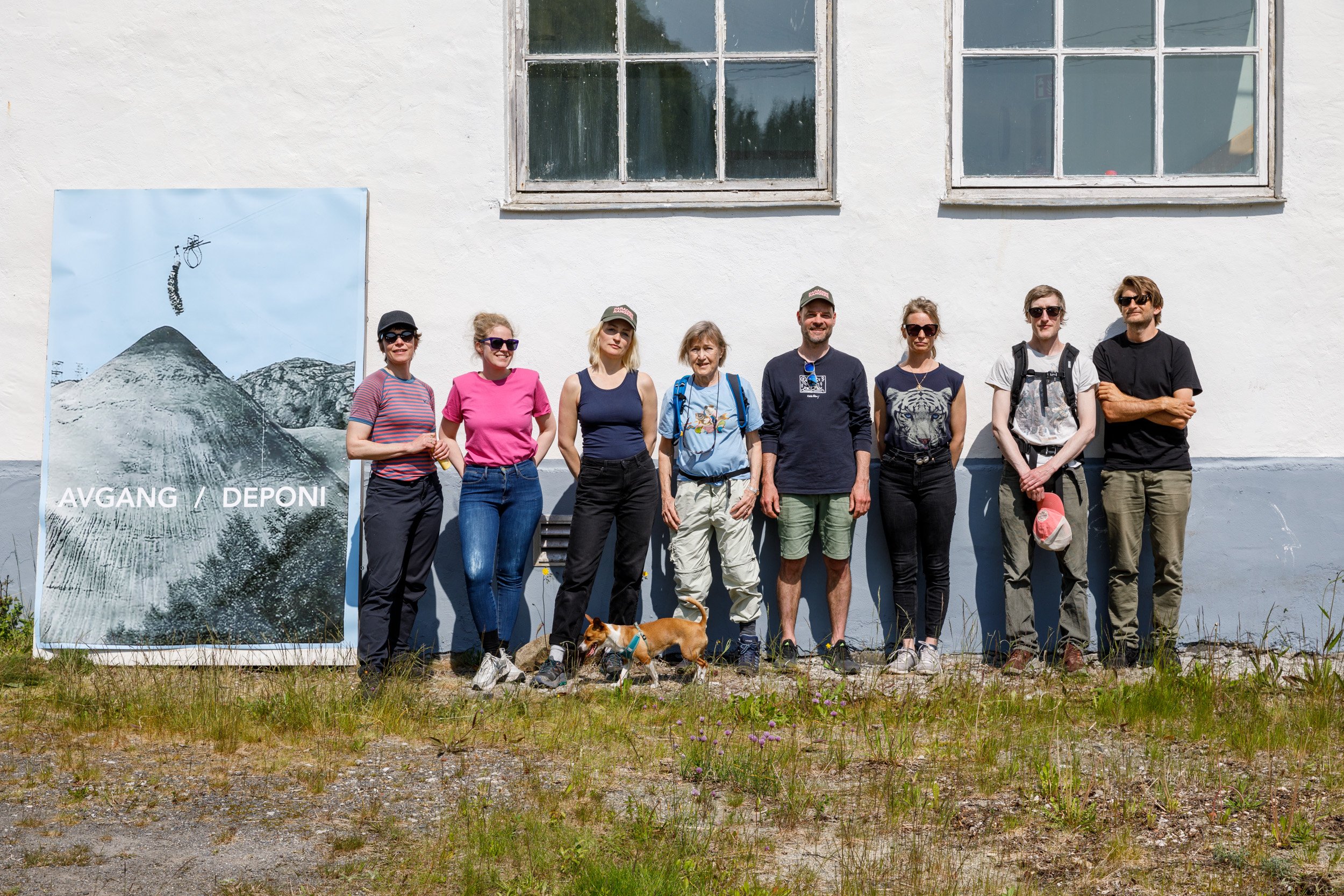
Initially, Stene and Hammonds held so-called " visits ", where artists from different disciplines met with local experts - such as scientists and conservationists - and representatives from the business community, to get to know and learn from each other.
From the inspections 2023
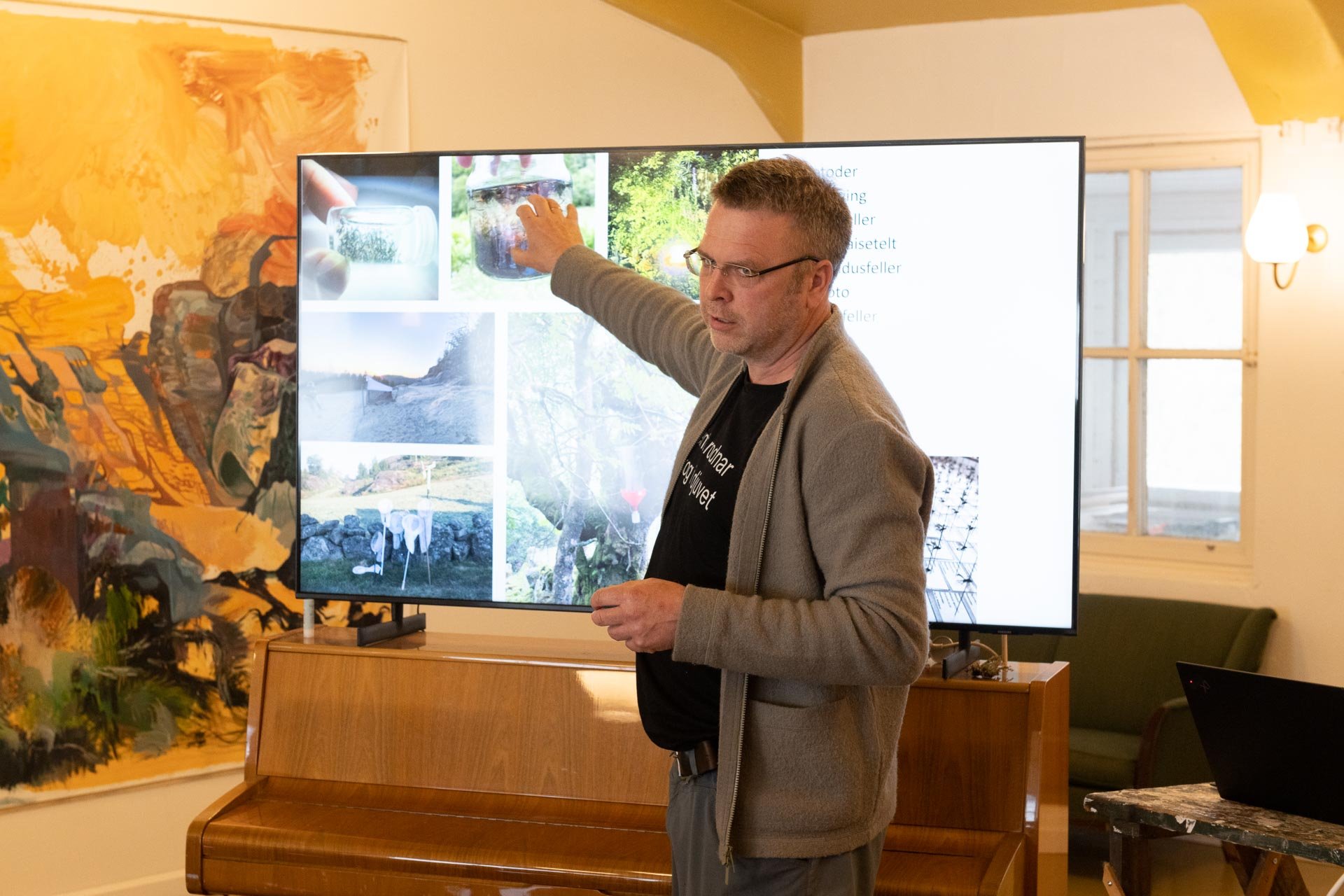
Amateur entomologist Jarl Birkeland talks during the inspections
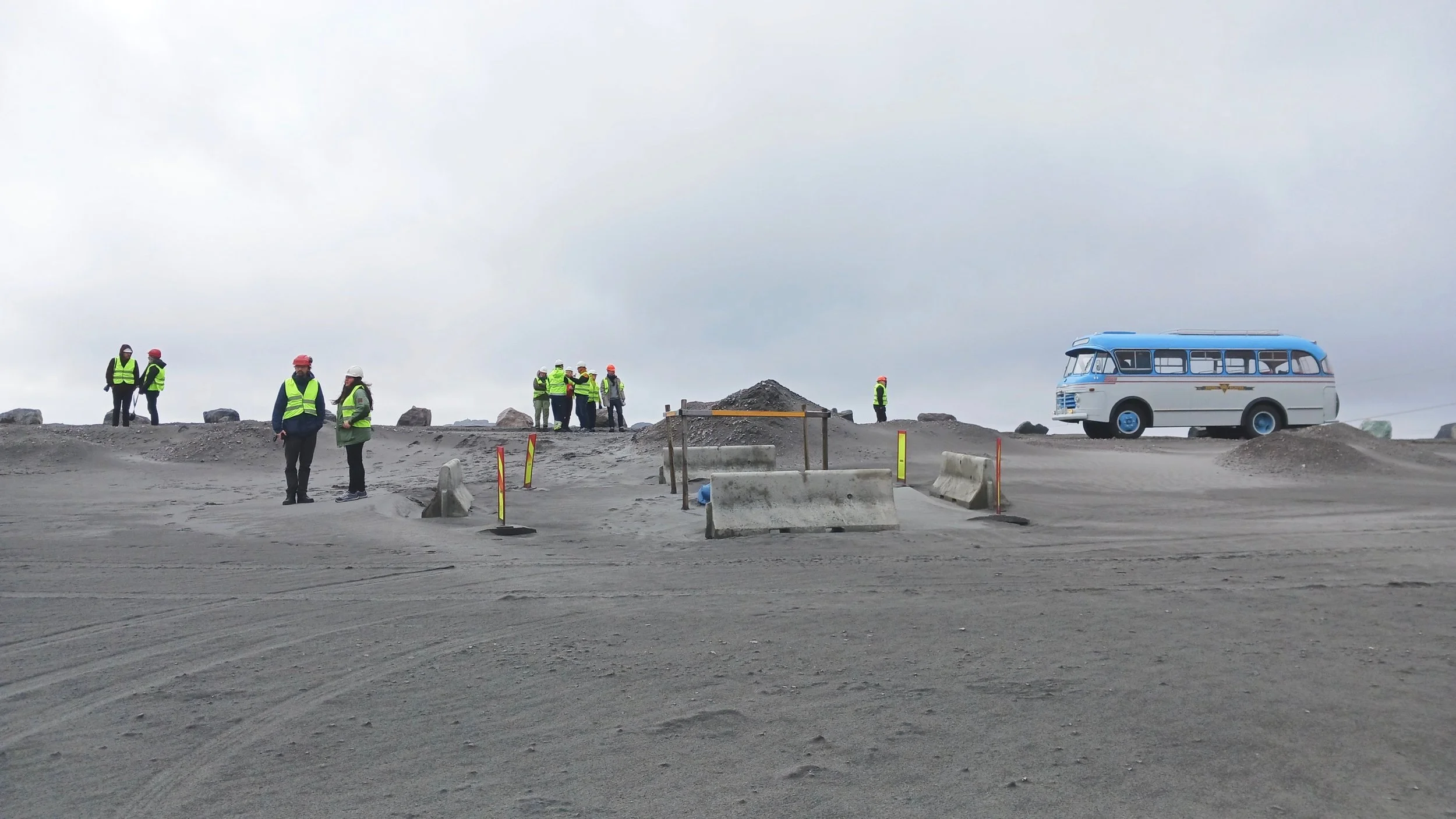
From the inspections 2023
Stene say that in order to make Velferden relevant to the local community, they aim to build bridges and talk across perspectives. It has been a goal to include many perspectives, because it reflects how complex the issue is. It has also been important to them that the participants get to meet the landscape that is in physical transformation, and get their own impression of what is happening.
Stene and Hammonds say they have also learned a lot during the program. During the Sand School experiment, they and four other visual artists studied the material properties of the seven million ton sand pile located in the backyard of Velferden. They collected and worked with sand from various deposits, and spoke with people who work at Titania about how the tailings are produced, which gave them a specialized physical understanding of the material that WASTE / DEPOSIT is about.
Hammonds says that on several occasions he has had to put aside his own convictions.
– I think it can be painful to see the effect on the landscape. But through WASTE / DEPOSIT I have learned that we are all part of mineral extraction.
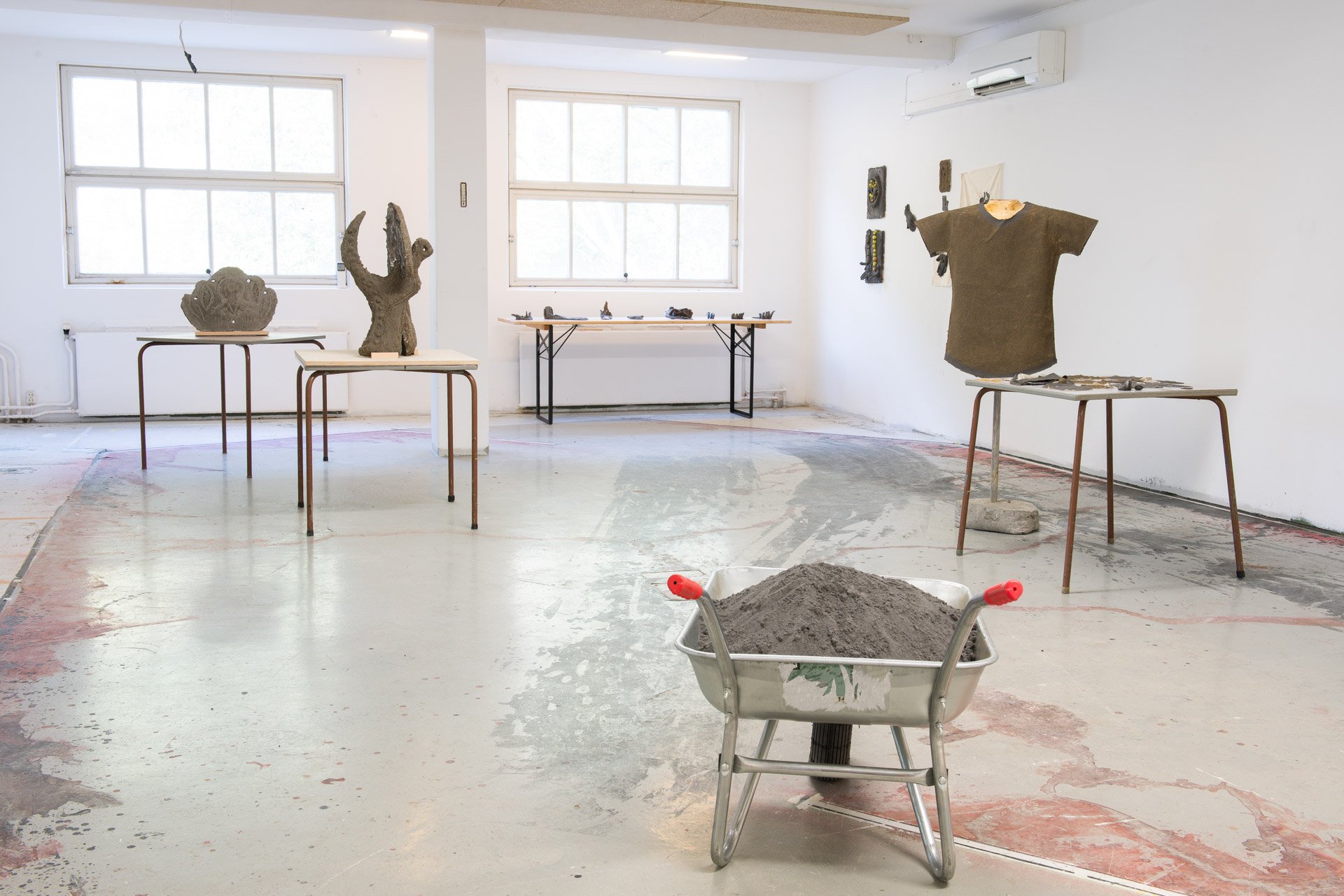
From the Sandskolen exhibition 2024
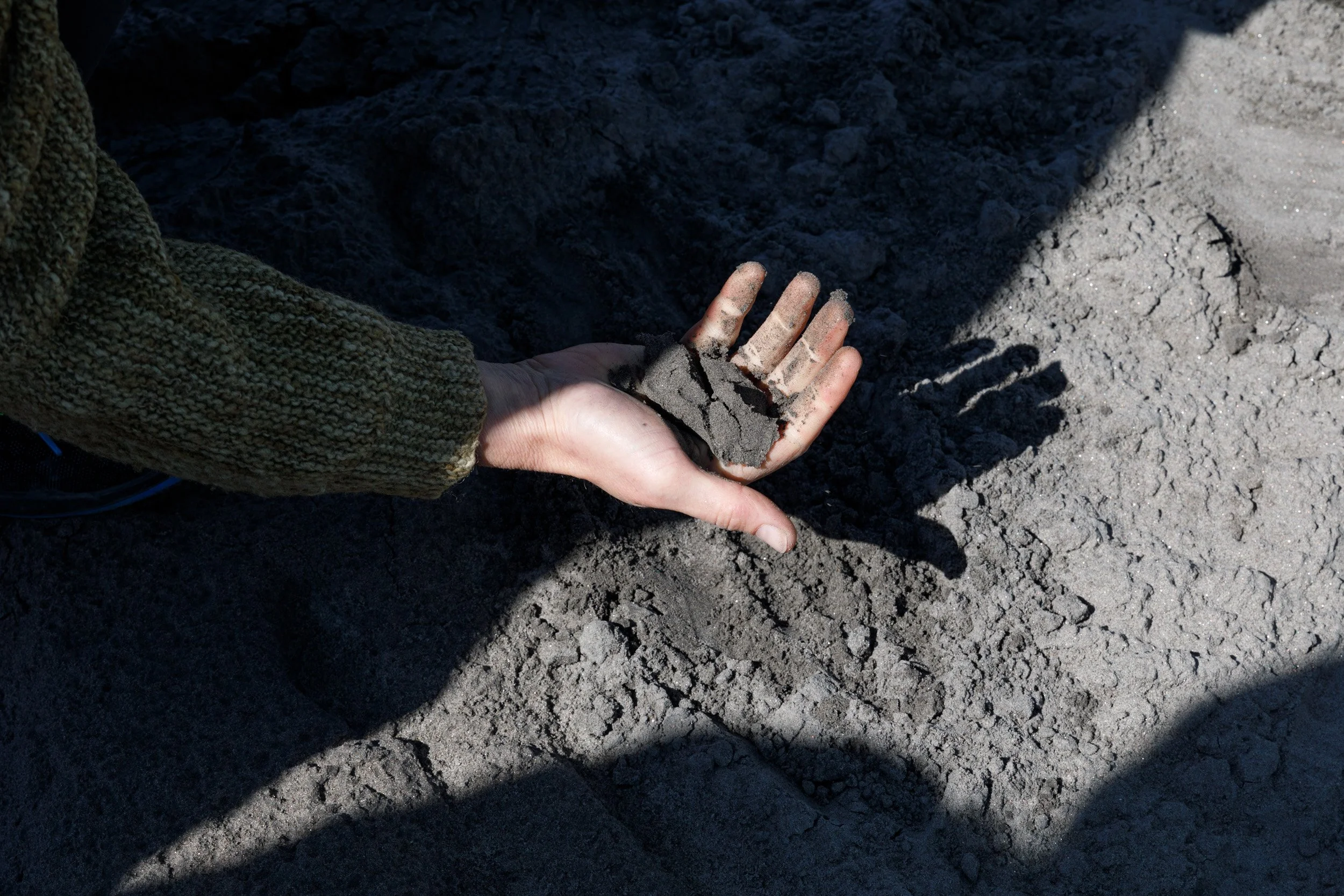
From the inspections 2023
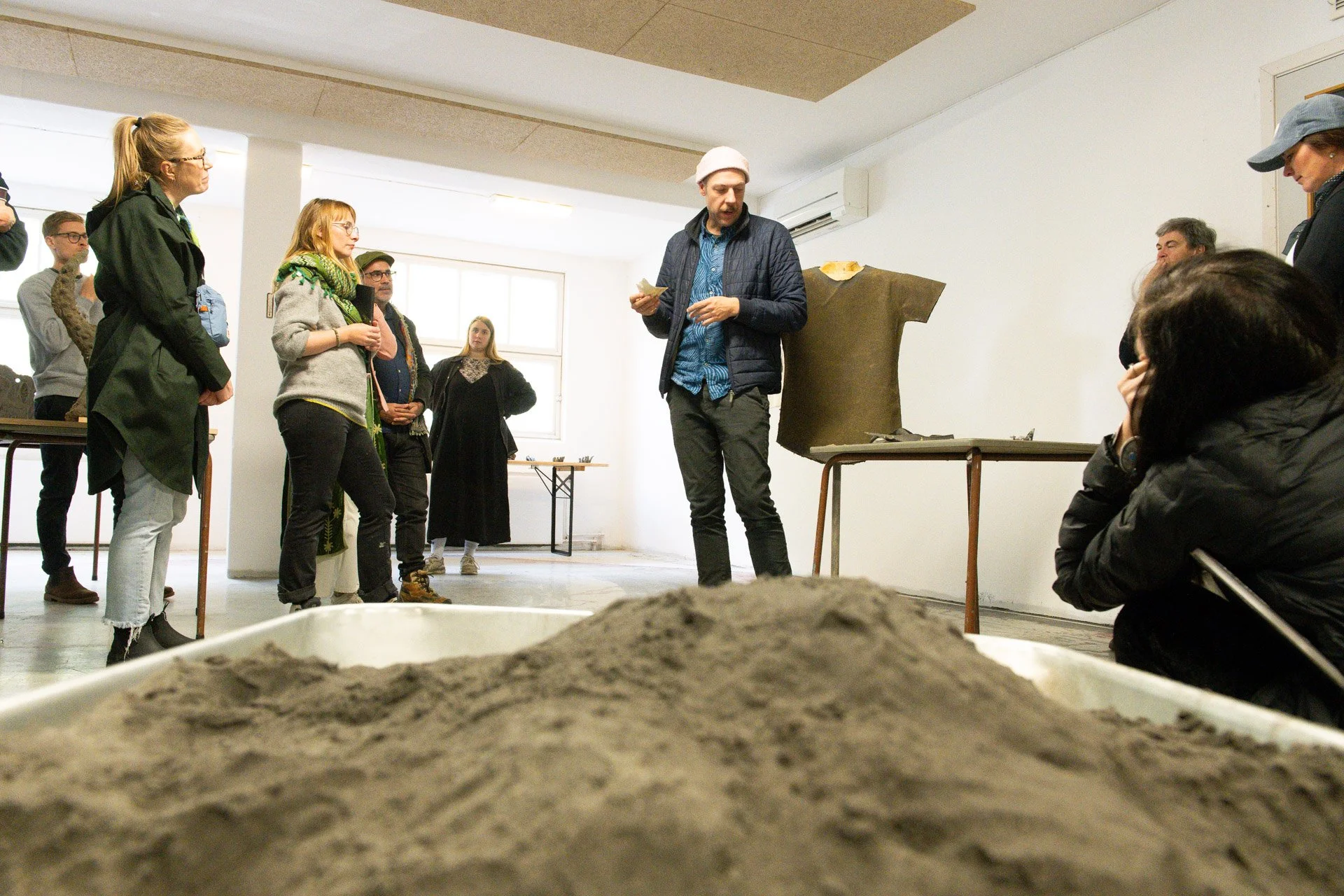
From Sandskolen 2024
During the project, he has realized how involved he is. He has learned that between 90-99% of the extracted mass ends up as waste when producing minerals for use in laptops and smartphones, for example.
– We are trapped in this mineral extraction cycle. And suddenly it becomes much more complex to be an environmentalist.
I still don't quite know how to deal with that. If I really want us to stop destroying so much nature in connection with mineral extraction, how much am I willing to sacrifice?
This summer the project will be completed with WASTE / DEPOSIT exhibition and seminar , as well as the digital publication . What the participating artists have in common is that they are interested in the site-specific, and see their projects into a larger context.
During the seminar , the duo will bring together artists, researchers, local residents, the public and business representatives in a workshop format, and set up a nuanced discussion, where everyone's perspectives are valuable. Stene and Hammonds will facilitate the possibility of learning something new about each other's fields and starting points.
The issues and themes are also relevant on a global level. What is happening in Sokndal reflects what is happening in society at large when it comes to waste and how we handle it.
MORE FROM WASTE / DEPOSIT :
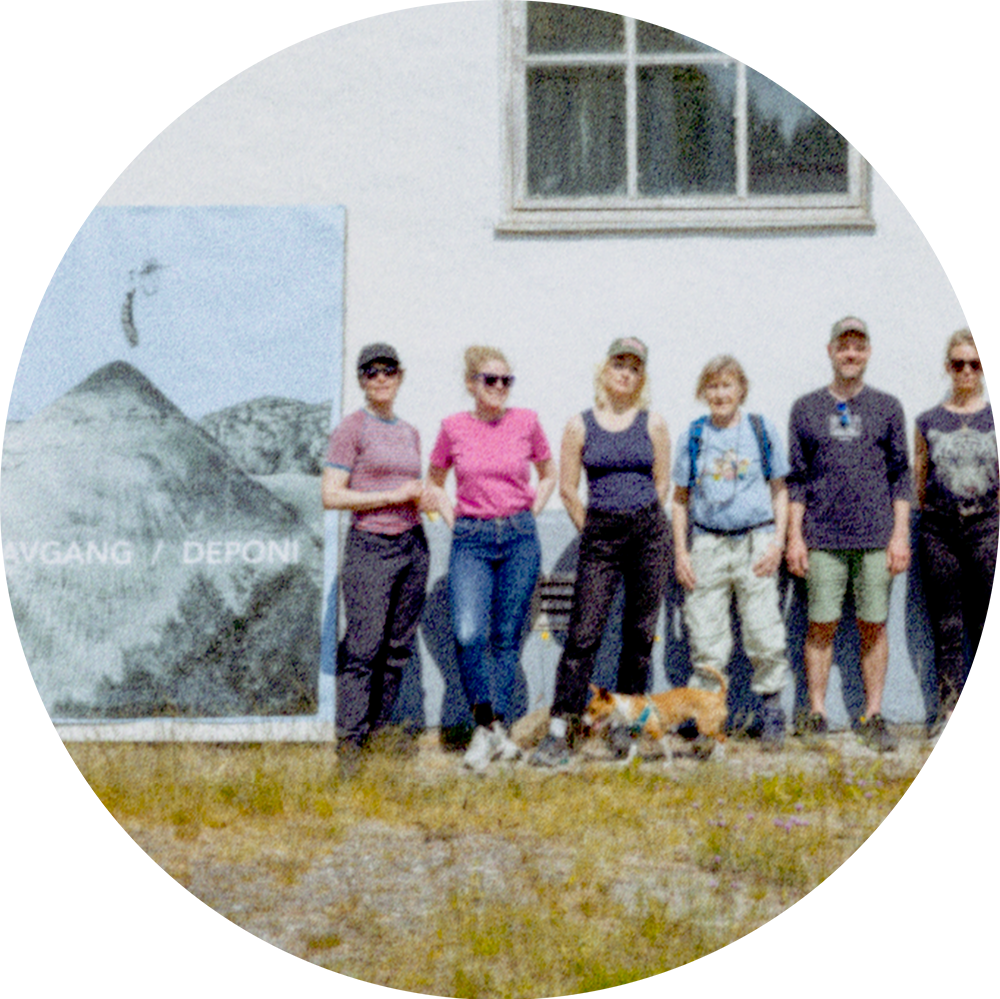
INSPECTIONS 2023
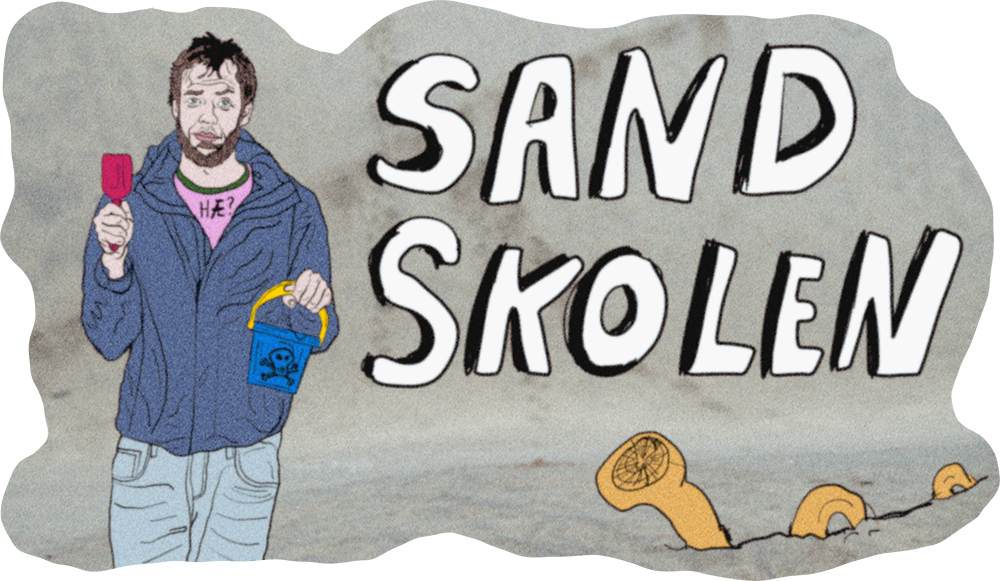
SANDSKOLEN / Velferden project
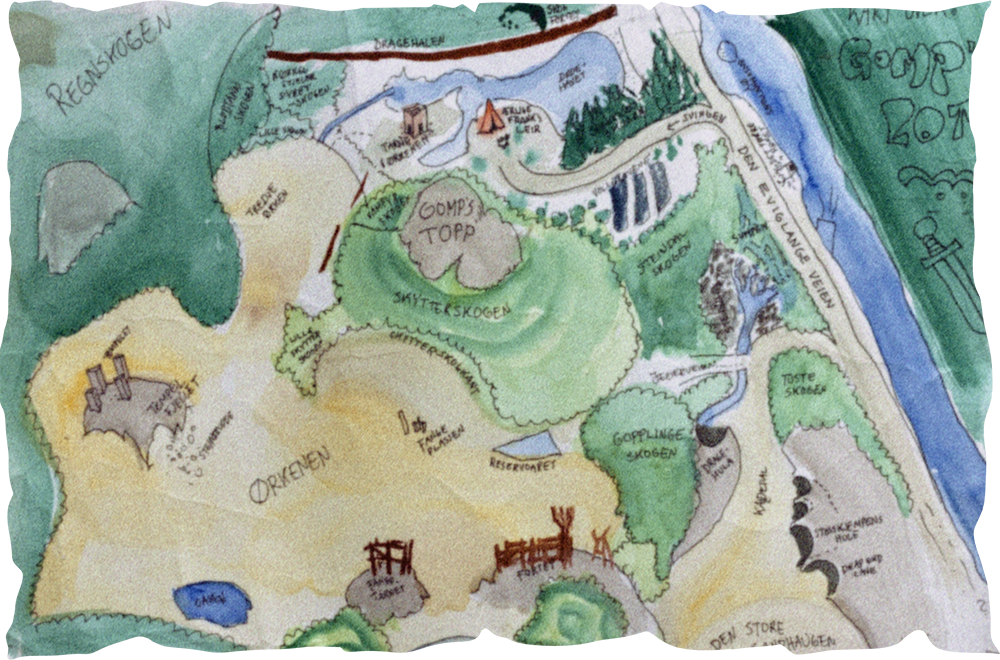
PAUL MAGNUS LUNDØ / filmmaker